Listed buildings present unique challenges when it comes to modern infrastructure. The same heritage protections that preserve architectural character can make installing fibre broadband legally complicated—but not impossible.
Over 500,000 listed buildings exist across the UK, housing hundreds of thousands of residents who need internet access just like everyone else. Whether you can get fibre broadband depends on your building’s listing grade, local planning authority, and how the installation is executed.
This guide explains exactly what’s required, when you need consent, and how to navigate the process successfully.
Understanding Listed Building Consent
Listed Building Consent (LBC) is legal permission required for any work that might alter a listed building’s character. This sits separate from standard planning permission and applies to internal and external modifications.
The Planning (Listed Buildings and Conservation Areas) Act 1990 makes unauthorised work on listed buildings a criminal offence. Penalties include unlimited fines and imprisonment up to two years.
What constitutes “work” requiring consent:
– Drilling into exterior walls
– Installing external boxes or cabinets
– Running cables across facades
– Altering historic fabric or features
– Making any permanent fixture
A 15cm fibre termination box on your Grade II listed cottage wall definitely requires consent. The process isn’t automatic approval either—local authorities can and do refuse applications.
When You Need Listed Building Consent for Fibre
You definitely need consent for:
– External ONT (Optical Network Terminal) boxes on listed walls
– Drilling through historic brickwork or stonework
– Installing overhead poles or cables visible from the street
– Underground ducting that disturbs historic grounds
– Any work to Grade I or Grade II buildings
You might not need consent for:
– Internal routing of cables within existing spaces
– Using pre-existing cable routes (old phone lines)
– Temporary installations that don’t damage fabric
– Work in modern extensions to listed buildings
The dividing line isn’t always clear. Historic England recommends consulting your Local Planning Authority (LPA) conservation officer before proceeding with ANY broadband installation work.
The Three Grades of Listing
Your listing grade significantly impacts the consent process:
Grade I (2.5% of listed buildings)
Buildings of exceptional interest. Getting consent for external fibre installations is extremely difficult. Expect:
– Detailed architectural surveys required
– Multiple consultations with conservation officers
– High likelihood of refusal for visible installations
– Lengthy approval process (6+ months typical)
Grade II (5.8% of listed buildings)
Particularly important buildings of special interest. Still challenging:
– Rigorous review of proposed work
– Need to demonstrate no alternatives exist
– Approval timescales 3-6 months
– May require specialist consultants
Grade II (91.7% of listed buildings)
Buildings of special interest. Most pragmatic approval:
– Simpler application process
– 8-week standard decision timeframe
– Good prospects if installation sympathetically designed
– May approve with conditions
How to Apply for Listed Building Consent
The application process varies by local authority but generally follows this structure:
Step 1: Pre-application consultation
Contact your LPA’s conservation team before formal application:
– Explain what broadband technology you’re seeking
– Describe proposed installation method
– Request informal guidance on likelihood of approval
– Ask about similar applications they’ve approved
This conversation often saves time and money by steering you toward acceptable solutions from the start.
Step 2: Gather required documentation
Standard LBC applications require:
– Completed application form (use Planning Portal)
– Detailed site plans showing building location
– Photographs of proposed installation areas
– Technical drawings of proposed equipment
– Heritage statement explaining the work
– Application fee (typically £100-300)
Step 3: Submit formal application
Applications submitted via:
– Local planning authority’s website
– Planning Portal (www.planningportal.co.uk)
– Paper submission to LPA planning office
Decision timeframe: 8 weeks standard, 13 weeks for complex cases.
Step 4: Await consultation responses
Your LPA consults:
– Historic England (for Grade I and some Grade II)
– Local conservation groups
– Amenity societies
– Parish councils
These consultations can recommend approval, conditional approval, or refusal.
Step 5: Decision and implementation
If approved, consent typically includes conditions:
– Specific materials or colours for equipment
– Precise positioning requirements
– Supervision by conservation officer during installation
– Photographic record of work
Consent typically remains valid for three years.
Alternative Installation Methods for Listed Buildings
Several approaches can avoid or simplify the consent process:
1. Internal routing via existing penetrations
Use established cable entry points from old phone lines:
– Avoids new drilling through historic fabric
– Keeps equipment hidden from exterior view
– Often doesn’t require full LBC
Work with your broadband installer to trace existing routes from outside telephone points through to interior spaces.
2. Installation within modern extensions
Many listed buildings have later additions not covered by listing:
– Check if your extension is included in listing
– Installations on modern elements may not need LBC
– ONT can be sited in non-listed portion
Obtain written confirmation from conservation officer that proposed location isn’t listed before proceeding.
3. Concealed external routing
Position equipment to minimise visual impact:
– Behind downpipes or guttering
– In recessed areas or alcoves
– Painted to match existing materials
– Positioned on secondary elevations away from primary facade
Conservation officers often approve sympathetically designed installations even on Grade II buildings.
4. Underground ducting
For properties with suitable access:
– Cable routed underground from street cabinet
– Minimal visual impact on building
– Entry point through discrete location
– More expensive but higher approval chances
Broadband Options That Don’t Require Building Work
If consent proves impossible or too complex, several alternatives provide high-speed internet without physical installation on listed buildings:
5G Home Broadband
Mobile networks deliver broadband via 5G signal:
– No installation or drilling required
– Simply plug in and power on
– Speeds 100-300 Mbps typical
– Available from EE, Three, Vodafone
Coverage matters—check postcode availability before ordering.
Fixed Wireless Access (FWA)
Point-to-point wireless from nearby transmitter:
– Small dish antenna required (may still need consent)
– Can deliver gigabit speeds
– Providers like Voneus, Broadway Partners
– Better for rural properties with line-of-sight
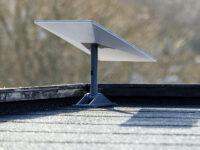
Satellite Broadband
Services like Starlink provide global coverage:
– Requires mounting dish (almost certainly needs LBC)
– Can be positioned less obtrusively than wall boxes
– Performance 50-150 Mbps typical
– No reliance on ground infrastructure
Even satellite dishes require Listed Building Consent for external mounting, but conservation officers sometimes view them more favourably than fibre termination boxes as they’re more easily removed.
Working With Broadband Providers
Major providers understand listed building challenges and often have specialist teams:
Openreach
Handles most UK fibre installations:
– Request consultation before booking installation
– Ask for survey by experienced surveyor familiar with heritage properties
– Can often find solutions using existing infrastructure
– May recommend wayleave application if standard install impossible
CityFibre
Alternative network provider:
– Operates in 80+ UK cities
– Contact local team before ordering
– Can adapt installation methods
– Sometimes more flexible than Openreach
Virgin Media
Uses own cable network:
– External wall boxes still required
– Same consent requirements apply
– Limited availability in heritage areas
Always inform providers about listed status when booking. Last-minute discovery on installation day wastes everyone’s time.
Costs and Timescales
Budget for these additional expenses beyond standard broadband costs:
– Listed Building Consent application: £100-£300
– Specialist surveys or heritage statements: £500-£2,000
– Planning consultant fees (if using): £1,000-£3,000
– Adapted installation work: £0-£500 (depends on provider)
– Total process duration: 3-6 months typical
Standard broadband installations take 2-4 weeks. Listed buildings require 3-6 months from initial consultation to completion.
What If Your Application Is Refused?
Refusal doesn’t mean permanent defeat. Options include:
1. Appeal the decision
Submit appeal within 6 months:
– Present additional evidence
– Demonstrate lesser visual impact
– Show comparable approved installations
– Costs £500+ with no guarantee
2. Revise and reapply
Address refusal reasons with modified proposal:
– Different equipment positioning
– Alternative installation method
– Additional mitigation measures
– No additional fees if resubmitted within 12 months
3. Seek alternative technologies
Move to solutions requiring less intrusive installation:
– 5G home broadband
– Enhanced mobile signal
– Long-range WiFi from nearby non-listed building
Real-World Examples
Grade II cottage in Bath (Approved)
– Application: Install ONT on rear elevation, painted to match stone
– Decision: Approved with conditions
– Condition: Cream-coloured enclosure, positioned behind drainpipe
– Timeframe: 10 weeks
Grade II manor house in Cotswolds (Refused then Approved)
– Initial Application: Standard grey ONT box on front facade
– Decision: Refused – excessive visual impact
– Outcome: Reapplied with concealed installation in existing telephone box housing – approved
Grade I townhouse in Edinburgh (Approved with modifications)
– Application: Fibre installation for business use
– Decision: Initial refusal, approved on appeal with bespoke wooden enclosure
– Cost: Additional £1,200 for custom housing
Future-Proofing and The Big Switch-Off
The UK’s PSTN (Public Switched Telephone Network) shutdown completes by January 2027. Copper phone lines carrying ADSL broadband are being retired.
This creates urgency for listed building owners:
– Current ADSL may become unavailable
– Full fibre or alternative needed before 2027
– Early planning essential given lengthy consent process
Start the conversation with your conservation officer now, even if you’re satisfied with current ADSL. Waiting until forced migration may leave you without viable options.
Getting Professional Help
Consider hiring specialists for complex cases:
Heritage consultants
Prepare applications and liaise with conservation officers:
– Understand listing implications
– Draft sympathetic proposals
– Higher approval rates
– Typical cost: £500-£1,500
Telecoms consultants
Design appropriate technical solutions:
– Survey existing infrastructure
– Identify least-invasive routing
– Coordinate with providers
– Typical cost: £300-£800
Planning consultants
Navigate LPA processes:
– Manage applications
– Handle correspondence
– Represent at hearings if required
– Typical cost: £1,000-£2,000
Costs £1,000-£3,000 total but significantly improve approval chances for difficult cases.
Checking If Your Building Is Listed
Not sure if your property is listed? Check these resources:
England:
– Historic England website: historicengland.org.uk/listing/the-list
– Search by postcode or address
Scotland:
– Historic Environment Scotland: portal.historicenvironment.scot
Wales:
– Cadw: cadw.gov.wales
Northern Ireland:
– Department for Communities: communities-ni.gov.uk
You can also contact your local planning authority who maintain comprehensive lists.
Getting fibre broadband in a listed building is absolutely possible—but requires planning, patience, and usually some form of consent. The process protects architectural heritage while accommodating essential modern infrastructure.
Start conversations early, work collaboratively with conservation officers, and explore creative installation solutions. Most applications for Grade II buildings succeed when thoughtfully presented.
And if all else fails, remember that 5G home broadband requires no building work whatsoever—sometimes the simplest solution works best. With coverage now reaching 60%+ of UK households, it’s become a genuinely viable alternative for many listed property owners who face complex consent challenges.
The key is not to give up at the first obstacle. Listed building protection exists to preserve our heritage, not to deny residents modern connectivity. With the right approach, you can have both.