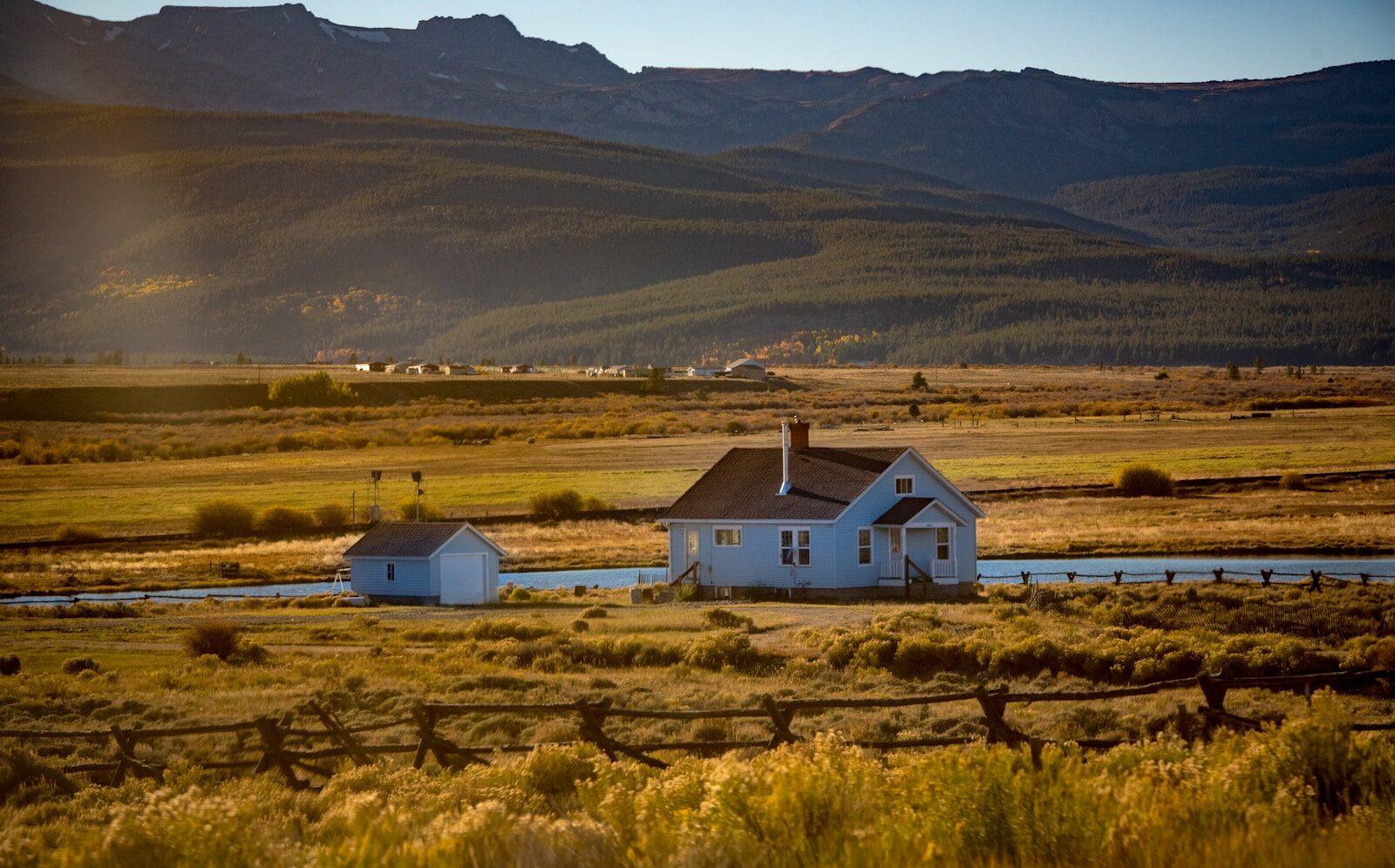
Living in the countryside brings plenty of rewards. Fresh air, open spaces, and a pace of life that city dwellers can only dream about. But when it comes to broadband, rural life often means slower speeds, fewer provider choices, and a frustrating gap between what you need and what you can actually get.
If you work from home, stream entertainment, or simply want a video call that doesn’t freeze every ten seconds, unreliable internet stops being a minor inconvenience and becomes a genuine problem. The good news? Rural broadband in the UK is improving fast, and you have more options than you might think. This guide walks you through every available route to getting reliable internet at your remote home, from satellite and 4G/5G to community-led fibre projects and government-funded upgrades.
The Challenges of Rural Broadband in the UK
The UK’s broadband infrastructure was built outward from towns and cities. Telephone exchanges, fibre cabinets, and mobile masts were placed where they could serve the most people for the lowest cost. That left rural and remote properties at the back of the queue, often relying on long copper telephone lines that simply cannot deliver modern speeds.
According to Ofcom’s 2024 Connected Nations report, around 80,000 UK premises still cannot access a decent broadband connection of at least 10 Mbps download and 1 Mbps upload. The vast majority of those properties sit in rural areas. Even where connections technically meet the “decent” threshold, many rural households experience speeds well below the UK median of around 60-80 Mbps that urban homes enjoy.
Geography plays a huge role. The further your home sits from the nearest telephone exchange or fibre cabinet, the weaker and slower your signal becomes over copper wiring. A home just two kilometres from the cabinet might get 20 Mbps on a standard ADSL line, while a property five kilometres away struggles to hit 3 Mbps. Hills, valleys, woodland, and scattered settlement patterns all make it harder and more expensive for providers to extend their networks.
Planning permission, wayleave agreements with landowners, and the sheer cost of digging trenches through farmland add further barriers. For a commercial broadband provider, connecting a cluster of five remote cottages will never offer the same return as wiring up a housing estate of five hundred homes. This economic reality is the single biggest reason rural broadband has lagged behind for so long.
The impact goes beyond slow Netflix buffering. Poor broadband affects property values, limits remote working opportunities, hampers farm businesses that increasingly depend on digital tools, and can leave rural communities feeling isolated from public services that have moved online.
Understanding Your Rural Broadband Options
Before choosing a provider or technology, it helps to understand the main broadband types available to rural UK homes. Each comes with trade-offs in speed, reliability, cost, and availability.
Standard ADSL and ADSL2+ runs over your existing copper phone line. It is widely available but delivers maximum speeds of around 10-17 Mbps close to an exchange, dropping sharply with distance. For many remote homes, real-world ADSL speeds fall below 5 Mbps.
Fibre to the Cabinet (FTTC) brings fibre optic cable to a green street cabinet, then uses copper for the final stretch to your home. Speeds reach up to around 80 Mbps, but again degrade over distance. If you live far from the cabinet, FTTC may offer little improvement over ADSL.
Full Fibre (FTTP) runs fibre optic cable directly into your property. This is the gold standard, offering speeds from 100 Mbps up to 1 Gbps and beyond. Availability in rural areas is growing thanks to government investment and alternative network operators, but many remote homes still lack access.
Fixed Wireless Access (FWA) uses a radio signal from a nearby mast or transmitter to deliver broadband to an antenna on your property. Speeds vary widely depending on the provider and your line of sight to the transmitter, typically ranging from 30 Mbps to over 100 Mbps.
4G and 5G Home Broadband uses mobile network signals through a dedicated router in your home. Where signal strength is good, this can deliver speeds that rival or exceed fixed-line connections.
Satellite Broadband beams your internet connection from orbit. It works virtually anywhere with a clear view of the sky, making it a true last-resort option for the most isolated properties.
Each of these technologies has a place, and your best option depends on your location, what’s already available, how much you’re willing to spend, and how much speed you genuinely need.
Satellite Broadband: Connecting Where Others Can’t
For homes where no fixed-line, wireless, or mobile broadband option delivers acceptable performance, satellite broadband fills the gap. It’s the one technology that doesn’t care how remote you are, because your connection comes from space rather than a roadside cabinet.
Traditional geostationary satellite services have been available in the UK for years through providers like Europasat and others reselling capacity on satellites orbiting around 35,000 kilometres above Earth. These services typically deliver download speeds of 30-50 Mbps, which is respectable on paper. The catch is latency. Because the signal must travel such a vast distance to the satellite and back, there is a delay of around 600 milliseconds or more on every interaction. That makes real-time activities like video calls, online gaming, and VPN connections noticeably sluggish.
Low Earth Orbit (LEO) satellite services have changed the picture dramatically. Starlink, operated by SpaceX, is the most prominent option available to UK customers. Starlink satellites orbit at roughly 550 kilometres, slashing latency to around 25-60 milliseconds, which is close enough to a fixed-line experience for most purposes. Typical download speeds reported by UK Starlink users range from 50 to 200 Mbps, though performance can vary depending on network congestion and your location.
The cost of Starlink is higher than most traditional broadband deals. The hardware kit (dish, router, and mounting equipment) costs several hundred pounds upfront, and the monthly subscription runs higher than a typical fibre package. For a remote home with no viable alternative, though, that premium often represents the difference between functional internet and near-total digital isolation.
Installation is straightforward. The Starlink dish needs a clear view of the sky, ideally mounted on a roof, pole, or wall bracket away from trees and buildings that could obstruct the signal. The system is largely self-installing, with an app that helps you find the best position.
Keep in mind that satellite broadband of any kind can be affected by heavy rain, snow, or dense cloud cover, a phenomenon known as “rain fade.” LEO services like Starlink handle weather better than older geostationary systems, but brief interruptions during severe storms are still possible. If you rely on a constant, unbroken connection for critical work, having a mobile broadband backup is a sensible precaution.
5G Home Broadband: A Growing Solution for Rural Areas
The UK’s mobile networks have been expanding their 5G coverage steadily, and while 5G remains concentrated in urban centres, a growing number of semi-rural and even rural locations now pick up a usable signal. For homes in these areas, 5G home broadband can deliver speeds that match or beat many fixed-line connections.
5G home broadband works through a dedicated plug-in router that connects to the mobile network and creates a Wi-Fi network inside your home. Unlike using a phone as a hotspot, these routers are designed for always-on home use with external antenna ports and better signal handling.
Providers like Three, Vodafone, and EE all offer 5G home broadband plans, some with unlimited data. Three has been particularly active in marketing its 5G hub to areas underserved by fixed-line broadband. In areas with strong 5G signal, download speeds can reach 100-300 Mbps, with some users reporting bursts above that.
The critical factor is signal strength at your property. Before committing to a 5G plan, check coverage maps on each network’s website, but treat them as a rough guide rather than a guarantee. Real-world coverage depends on your distance from the mast, terrain, building materials, and even the season (trees in full leaf can reduce signal strength).
If 5G isn’t available at your address, 4G home broadband remains a solid alternative. 4G coverage is far more extensive across rural UK, and a 4G router with an external antenna can often pull in a workable signal where your phone shows only one or two bars. Speeds of 20-60 Mbps are realistic on a good 4G connection with proper antenna placement.
To get the best from any mobile broadband setup in a rural area, consider investing in an external antenna mounted high on your building. A directional antenna pointed at the nearest mast can boost your signal substantially. Specialist retailers sell antenna kits designed for rural installations, and the difference they make is often dramatic.
Data caps are worth watching. While many 5G home plans now offer unlimited data, some 4G deals still impose monthly limits. If your household streams video regularly or has multiple people working from home, make sure your plan can handle the volume.
Community Fibre and Alternative Networks: Localised Solutions
One of the most encouraging developments in rural broadband has been the rise of community-led and alternative network fibre projects. Where large national providers see insufficient commercial return, smaller operators and community groups have stepped in to build full fibre networks from the ground up.
Alternative network operators (altnets) like Gigaclear, Wessex Internet, B4RN (Broadband for the Rural North), and Zzoomm focus specifically on connecting rural and underserved areas. These companies often work in partnership with local councils, landowners, and residents to plan routes and share costs.
B4RN is a particularly inspiring example. Set up as a community benefit society in Lancashire, B4RN relies partly on volunteer labour from residents who help dig trenches across farmland to lay fibre. The result is hyperfast, full fibre broadband at competitive monthly prices for communities that BT Openreach and Virgin Media had effectively bypassed. B4RN now serves thousands of properties across northern England and has inspired similar projects elsewhere.
Gigaclear operates commercially across rural England, building FTTP networks in areas where Openreach’s rollout has been slow or absent. They’ve faced some delays and criticism over missed build targets, but continue to expand coverage across counties including Oxfordshire, Wiltshire, Herefordshire, and others.
If your area doesn’t yet have an altnet provider, you might be able to trigger one. Many operators use “demand registration” tools on their websites. When enough households in a postcode area register interest, the provider assesses the viability of building a network there. Rallying your neighbours to register can genuinely move your community up the build schedule.
Community broadband projects need local champions, people willing to organise meetings, coordinate with landowners for wayleaves, and sometimes contribute sweat equity. The effort is real, but the reward is a future-proof fibre connection that no other option can match for speed and reliability.
Grants and Schemes: Funding Your Rural Broadband Upgrade
The UK government and devolved administrations recognise that market forces alone won’t connect every rural home, so several publicly funded schemes exist to bridge the gap. Taking advantage of these can significantly reduce your costs.
Project Gigabit is the UK government’s flagship programme, investing up to £5 billion to bring gigabit-capable broadband to hard-to-reach areas across England. Through Project Gigabit, the Department for Science, Innovation and Technology (DSIT) awards contracts to broadband providers to build networks in specific rural areas. You can check whether your area is included in a current or planned procurement on the Project Gigabit page on GOV.UK.
The Gigabit Broadband Voucher Scheme provides funding directly to residents and businesses in rural areas to contribute towards the cost of installing gigabit-capable broadband. Vouchers are worth up to £4,500 per business and up to £1,500 per residential property, and they can be pooled together within a community to fund a shared network build. This scheme is a powerful tool when combined with a willing altnet provider. A group of neighbours pooling their vouchers can often cover a large chunk of the installation cost for a new fibre connection.
In Scotland, the R100 programme (Reaching 100%) aims to bring superfast broadband to every home and business in Scotland. The Scottish Government has also offered its own voucher scheme for properties outside the R100 build plans. The Scottish Broadband Voucher Scheme has helped thousands of properties get connected.
Wales has the Superfast Cymru successor programmes, and Northern Ireland has its own Project Stratum delivering improved broadband across rural areas.
Your legal right to decent broadband is another tool worth knowing about. Since March 2020, every UK home and business has the legal right to request a decent broadband connection of at least 10 Mbps download and 1 Mbps upload. If your broadband falls below this, you can make a request to BT (which has the Universal Service Obligation). BT must then provide a connection, though if the cost of installation exceeds £3,400, you may be asked to contribute the difference. You can learn more about this right on the Ofcom Universal Service page.
It’s worth checking all available schemes before signing a long-term satellite or mobile broadband contract. A fully funded or subsidised fibre connection will outperform any wireless or satellite alternative and add real value to your property.
Choosing the Right Rural Broadband Provider
With multiple technologies and providers available, narrowing down the right choice for your home involves a few practical steps.
Start with a postcode check. Most providers let you enter your postcode on their website to see what’s available. Do this across several providers, including altnets that serve your region, not just the big names. Openreach’s network checker will show whether FTTC or FTTP is available via their infrastructure, which underpins services from BT, Sky, TalkTalk, Plusnet, and others.
Compare real speeds, not advertised maximums. Providers must now show “average” speeds, but for rural homes, your actual performance may sit well below even those averages. Independent speed test data and local community forums can give you a clearer picture. Ask your neighbours what they use and what speeds they get in practice.
Look at contract length and terms. Some rural-focused providers offer shorter contracts or rolling monthly plans, which gives you flexibility to switch if a better option becomes available in your area. Given how quickly rural broadband is improving, locking into a 24-month deal on a slower technology could mean missing out when fibre arrives six months later.
Factor in total cost. Satellite services and some fixed wireless providers charge for equipment upfront. 5G routers may be included with a contract or sold separately. A slightly higher monthly fee with no setup cost might work out cheaper over 12-18 months than a cheap tariff with a large upfront payment.
Prioritise reliability over raw speed. For remote working, video conferencing, and everyday household use, a stable 30 Mbps connection beats a 100 Mbps link that drops out regularly. Read reviews from other rural customers, focusing on reliability and customer support rather than peak download speed.
Check for data limits. Some satellite and 4G plans still impose data caps or throttle speeds after a certain usage threshold. If your household uses several hundred gigabytes per month, as many UK homes now do, make sure your plan can handle that without hidden restrictions.
Future-Proofing Your Rural Internet Connection
The rural broadband picture in the UK is changing faster than it has at any point in the past decade. Project Gigabit contracts are being awarded across England, altnet operators are expanding aggressively, and mobile network coverage keeps improving with every new mast.
If you’re about to invest in a broadband solution for your rural home, think beyond your immediate needs. A satellite connection might solve your problem right now, but if fibre is due to reach your village within the next 18 months, it might be worth choosing a short-term or monthly rolling contract so you can switch when the time comes.
Stay informed about what’s planned for your area. Your local council’s broadband team or digital connectivity officer can usually tell you which government-funded build programmes are active or upcoming nearby. Community broadband groups on social media and forums like ISPreview.co.uk track rollout progress at a granular postcode level and can be an excellent source of up-to-date information.
If nothing is planned for your area, make noise. Register your demand on provider websites, contact your MP, engage with parish councils, and connect with neighbours who share the frustration. The squeaky wheel principle genuinely applies here. Areas with vocal, organised communities tend to move up priority lists faster than quiet ones.
Technology is also advancing in your favour. Each generation of satellite and mobile broadband delivers better speeds and lower latency. LEO satellite constellations will grow, adding capacity and reducing congestion. 5G coverage will expand into more rural areas as operators fill gaps in their networks. Fixed wireless technology is improving too, with newer standards capable of delivering gigabit speeds over radio links.
The days of rural homes being permanently stuck with unusable internet are numbered. Your job right now is to find the best available option for your home, keep one eye on what’s coming next, and make sure you’re positioned to upgrade when something better arrives. Reliable internet in a remote home isn’t a luxury any more. It’s an expectation you have every right to meet.