Ofcom Grants Kepler UK Licence for Compact Broadband Satellites
Canadian company Kepler Communications has been granted a wireless telegraphy satellite earth station network licence by UK regulator Ofcom. The licence allows Kepler to deploy user terminals for a range of services using their new global network of compact CubeSat broadband satellites.
CubeSats: The Next Frontier in Satellite Broadband
Kepler’s satellites conform to the CubeSat standard, typically weighing only a few kilograms and not much bigger than a human hand. This is in stark contrast to traditional geostationary orbit (GSO) satellites, which are the size of a large bus and weigh several tons.
Recent pioneers like SpaceX’s Starlink and OneWeb have deployed larger low Earth orbit (LEO) satellites, which provide ultrafast broadband speeds and low latency. But Kepler’s CubeSats take miniaturization to the next level.
IoT and Real-Time Data Transfer
Kepler’s system is designed to support connectivity services for UK consumers and businesses, including:
- Store and forward based Internet of Things (IoT)
- Real-time data transfer services once the network is fully deployed
The constellation will comprise 140 satellites at an altitude of 575km, providing coverage over the entire UK. It currently operates 20 satellites in 7 orbital planes.
Coexistence with Other Services
Ofcom considers Kepler’s system capable of coexisting with:
- Existing non-geostationary satellite orbit (NGSO) licensees
- Future NGSO systems in the Ku band
- Other services in the same or adjacent frequencies, like radio astronomy and GSO satellite networks
Kepler has provided evidence that coordination discussions with other NGSO licensees are underway.
Impressive Early Performance Tests
Early tests on a SAILOR 600 Ku 60cm marine stabilized antenna system showed download rates of 150Mbps and uploads of 130Mbps. This bandwidth is shared between many ground users and IoT sensors, with individual connection speeds intended to be in the 1-40Mbps range.
Bigger GEN2 Satellites in the Pipeline
Kepler’s plan includes deploying 50 larger second-generation (GEN2) satellites, each weighing over 100kg. The GEN2s are designed for optical inter-satellite links, data relay services, and delivering much faster broadband speeds to end-users.
Licence Covers Wide Range of User Terminals
Ofcom’s network licence allows Kepler to use all types of user terminals in the UK:
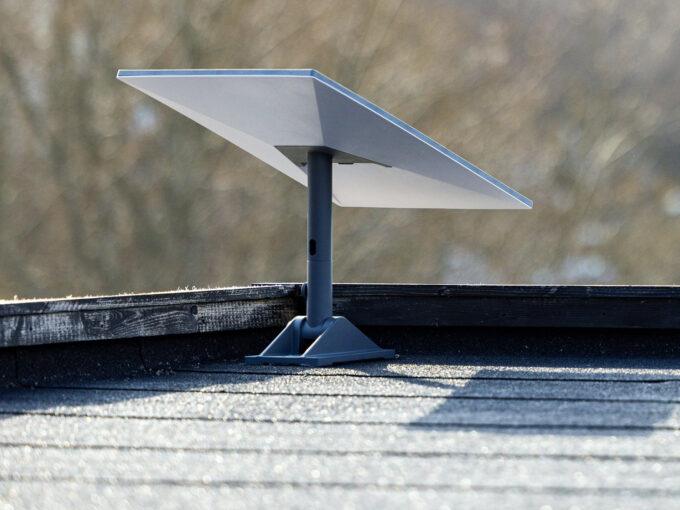
- Fixed or static terminals for home broadband
- Land mobile terminals on trains or roads
- Terminals on aircraft, drones, offshore platforms and ships
Looking Ahead
While Kepler’s rollout is running behind their original schedule, the Ofcom licence marks a significant step forward. As the constellation grows, UK consumers and businesses can look forward to a new era of satellite connectivity, powered by cutting-edge CubeSat technology.
With bigger GEN2 satellites on the horizon offering even faster speeds, Kepler is poised to play a key role in expanding broadband access and enabling new IoT applications across the UK. The future of satellite broadband looks promising indeed.