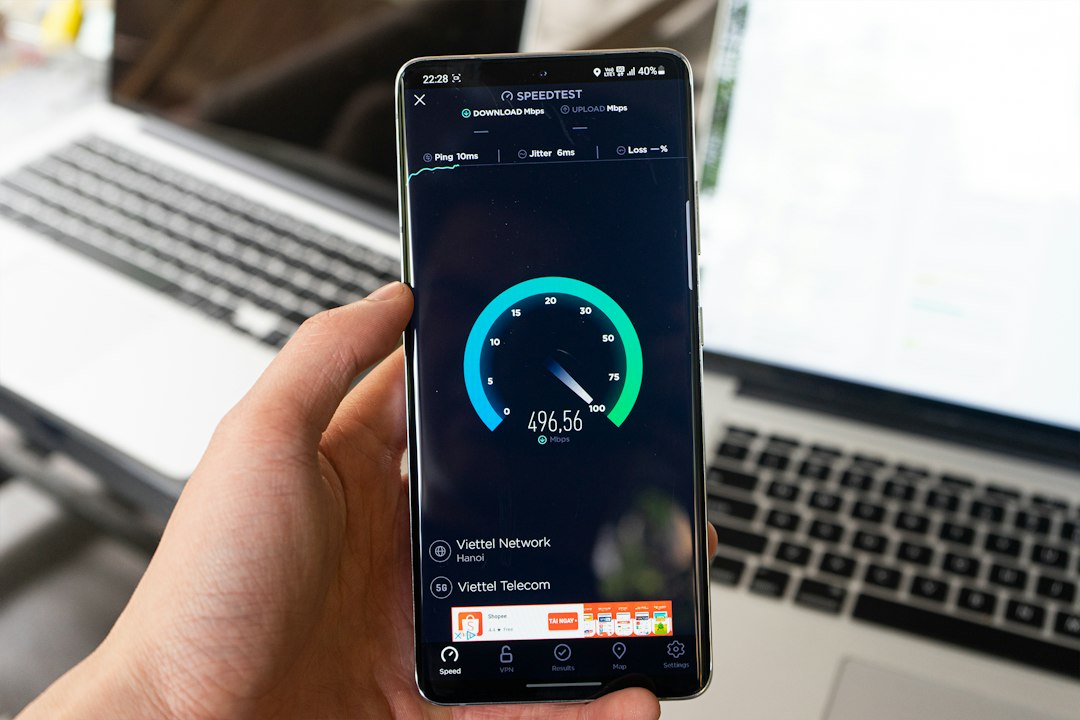
Business broadband availability

When setting up or relocating a business, securing reliable broadband connectivity is often as critical as finding the right premises. Unlike residential broadband, business connectivity requirements are typically higher, with greater emphasis on upload speeds, reliability, and service level agreements. However, not all business broadband services are available everywhere in the UK, and understanding what's accessible at your location is the first step to making an informed decision.
How business broadband availability differs from residential
Business broadband availability follows similar patterns to residential services, but with some important distinctions. Many providers offer dedicated business packages that include enhanced customer support, faster repair times, and guaranteed upload speeds—but these aren't always available in areas with limited infrastructure.
The key differences include:
- Dedicated fibre options: Leased lines and Ethernet services often unavailable in rural or remote locations
- Service level agreements (SLAs): Business-grade SLAs typically require infrastructure that supports prioritised traffic
- Static IP addresses: More readily available in areas with robust network infrastructure
- Symmetrical speeds: Full-fibre business services offering identical upload and download speeds depend on FTTP or dedicated fibre availability
Checking business broadband availability at your premises
Before committing to premises or switching providers, you need to establish exactly what services can reach your location. Start by checking availability through multiple channels:
Using provider websites
Most business broadband providers offer online availability checkers. You'll need your business premises postcode and sometimes the full address. Major providers like BT Business, Virgin Media Business, TalkTalk Business, and Zen Internet all maintain checker tools on their websites.
When using these tools, request information for both standard business broadband and dedicated connectivity options like leased lines. Results typically show:
- Maximum speeds available
- Technology type (ADSL, FTTC, FTTP, cable)
- Estimated installation timeframes
- Whether street works are required
Checking Ofcom's broadband checker
Ofcom's independent broadband availability checker (available at checker.ofcom.org.uk) provides a technology-neutral view of what's available. Whilst primarily consumer-focused, it gives you a baseline understanding of the infrastructure serving your location.
Consulting with business connectivity specialists
For more complex requirements, specialists like Exascale, 6DS, or business-focused comparison services can check availability across multiple providers simultaneously. They often have access to wholesale availability databases that reveal options not visible through consumer-facing tools.
Understanding technology types and their availability
ADSL and FTTC
These technologies are available at virtually any UK premises with a phone line. ADSL typically delivers up to 24Mbps download, whilst FTTC (fibre to the cabinet) can reach 80Mbps download and 20Mbps upload. Both are distance-dependent—performance degrades the further you are from the street cabinet or telephone exchange.
Full fibre (FTTP)
Full-fibre business broadband offers speeds from 100Mbps to 1Gbps or higher, with symmetrical upload and download options. Availability has expanded rapidly, with Openreach, CityFibre, and alternative network providers rolling out infrastructure. However, coverage remains patchy in rural areas and some business parks.
Cable broadband
Virgin Media Business offers cable-based connectivity in areas covered by their network, typically urban centres and well-established business districts. Cable can deliver speeds up to 1Gbps but is only available to approximately 50% of UK premises.
Dedicated fibre (leased lines and Ethernet)
These point-to-point connections offer the highest reliability and guaranteed bandwidth. Availability depends on proximity to provider infrastructure. In city centres, installation is usually straightforward. In rural areas, costs can be prohibitive if extensive new cabling is required.
What to do when availability is limited
Consider alternative network providers
If Openreach-based services show limited speeds, check whether alternative networks serve your area. Providers like CityFibre, Hyperoptic, Community Fibre, and Gigaclear may have installed infrastructure that Openreach-reselling providers don't use.
Explore wireless options
Fixed wireless access (FWA) providers like Voneus, Broadway Partners, or regional WISPs (Wireless Internet Service Providers) can deliver business-grade connectivity without physical cables. This is particularly viable in rural areas with line-of-sight to transmission masts.
Investigate mobile broadband solutions
Modern 4G and 5G services can provide backup or even primary connectivity for businesses in poorly-served areas. Business-specific mobile broadband packages from EE, Vodafone, and Three offer static IP options and higher data allowances.
Plan for infrastructure installation
If your business has specific connectivity requirements and standard services don't meet them, you may need to fund infrastructure installation. This could involve:
- Contributing to the cost of extending fibre to your premises
- Funding a dedicated leased line installation
- Participating in community fibre initiatives or voucher schemes
The government's Gigabit Voucher Scheme can provide up to £3,500 towards installation costs for SMEs in eligible areas.
Timescales for installation and activation
Business broadband installation timescales vary significantly based on technology and existing infrastructure:
- Standard FTTC/ADSL: 5-10 working days if infrastructure exists
- FTTP (where available): 10-15 working days for standard installations
- Cable broadband: 10-20 working days depending on internal cabling requirements
- Leased lines: 45-90 working days, potentially longer if extensive civil works are needed
- Wireless solutions: 10-30 working days following site survey
Always factor in sufficient lead time when planning office moves or new business premises.
Working with landlords and business parks
If you're leasing premises, check with landlords or business park management about existing connectivity infrastructure. Some business parks have:
- Pre-installed ducting making fibre installation easier
- Agreements with specific providers offering preferential rates
- Shared infrastructure reducing individual business costs
- Wayleave agreements already in place, speeding up installation
Obtain written permission from landlords before commissioning any installation that requires building alterations or external cabling.
Future-proofing your business connectivity
When assessing availability, consider not just current needs but future requirements:
- Choose locations with multiple technology options to avoid vendor lock-in
- Verify upgrade paths—can 100Mbps connections be upgraded to 1Gbps without new infrastructure?
- Check whether backup connectivity options exist for business continuity
- Investigate whether planned infrastructure projects will improve availability in the next 1-3 years
Key takeaways
- Business broadband availability varies significantly by location and technology type—always check multiple providers and technologies before committing to premises
- Use provider-specific checkers, Ofcom's tool, and specialist consultants to get a complete picture of what's available at your location
- If standard services are inadequate, explore alternative networks, wireless solutions, mobile broadband, or funded infrastructure installation through schemes like the Gigabit Voucher programme
- Factor in realistic installation timescales (from 5 days for basic connections to 90+ days for leased lines) when planning office moves or expansions
- Consult with landlords and business park management about existing infrastructure and wayleave agreements to streamline installation and potentially reduce costs

Paul Madden
Paul founded Broadband Provider to give UK households an independent, commercially-transparent guide to home broadband. He sets the strategy for the site, approves every story before it is published, and has final editorial sign-off on reviews, guides and corrections.
He also oversees commercial partnerships, running affiliate partnerships and advertising separately from editorial decisions. Commercial terms never influence how deals are ranked or what a review says.