Broadband compensation UK: what you can claim for outages and slow speeds
 Julian Glover
If your broadband stops working completely, an engineer misses an appointment, or your new service is switched on late, you can usually get money back without arguing for it. Under Ofcom's automatic compensation scheme, providers that have signed up pay a fixed daily amount, credited straight to your bill. You do not normally need to negotiate or fill in a form.
The amounts are set nationally and reviewed each April in line with the Consumer Price Index, so every provider in the scheme pays the same headline rates. Here is exactly what you can claim, when the clock starts, and where slow speeds fit in, because slow speeds are handled under a separate set of rules entirely.
What is broadband automatic compensation?
Automatic compensation is an industry scheme, backed by Ofcom, that pays you a set amount when your provider gets three specific things wrong: a total loss of service that drags on, a missed engineer appointment, and a delayed start to a new service. Providers that have joined agree to work out what you are owed and apply it as a credit to your account, usually within 30 days of the problem being resolved.
The important word is automatic. For missed appointments and late activations, you should not have to do anything at all. For a total loss of service, there is one catch that trips a lot of people up: you have to report the fault first. If you never report it, the clock never starts and you may get nothing, even if the outage was a known problem across your whole street.
When you're covered
The scheme covers three situations.
Total loss of service. This means your broadband or landline has stopped working completely, not that it is slow or dropping in and out. Providers define it as being unable to connect to the internet over a wired connection, or being unable to make or receive any calls. You report the fault, the provider gets two full working days to fix it, and if it is still not fixed after that, compensation starts.
Missed appointments. If an engineer does not turn up on the agreed date, or the provider cancels or changes the visit with less than 24 hours' notice, you get a fixed payment for each missed appointment. Give more than 24 hours' notice and no payment is due. Cancel on the day yourself and you get nothing.
Delayed activation (delayed provisioning). When you order a new service, the provider confirms an activation date. If your service is not live by 11.59pm on that confirmed date, you get a daily amount for every full day it is late, counting from the missed activation date onwards.
How much you get and when payments start
The current headline rates are the same across providers in the scheme:
| Problem | Rate | When it starts |
|---|---|---|
| Total loss of service | £10.34 per day | From the third full working day after you report the fault |
| Missed appointment | £32.31 per appointment | On the missed or late-cancelled visit |
| Delayed activation | £6.46 per day | From the confirmed activation date onwards |
For a total loss of service, the provider has two full working days to fix things before any money is due. Working days are Monday to Friday, and public holidays and weekends do not count. So if you report a fault on a Monday, compensation starts from the Thursday if it is still not fixed. Report it on a Friday and, because of the weekend, compensation starts from the following Wednesday. If a bank holiday falls between your report and the compensation starting, that adds another day.
A worked example from EE shows how this stacks up. Report a fault on Monday, and if it is not fixed by 11.59pm on Wednesday you start earning from Thursday. If it stays broken until the following Monday, you collect £10.34 for each day from Thursday to Sunday, which comes to £41.36.
Delayed activation works day by day too. If your service was due on Monday but does not go live until Friday, that is four late days at £6.46, or £25.84.
There is a ceiling. For a total loss of service or a delayed activation, compensation is capped at 60 days. Several providers also confirm that if a total loss of service or activation is not sorted within 30 days, you get the right to leave without paying any early termination charges.
Compensation for slow speeds
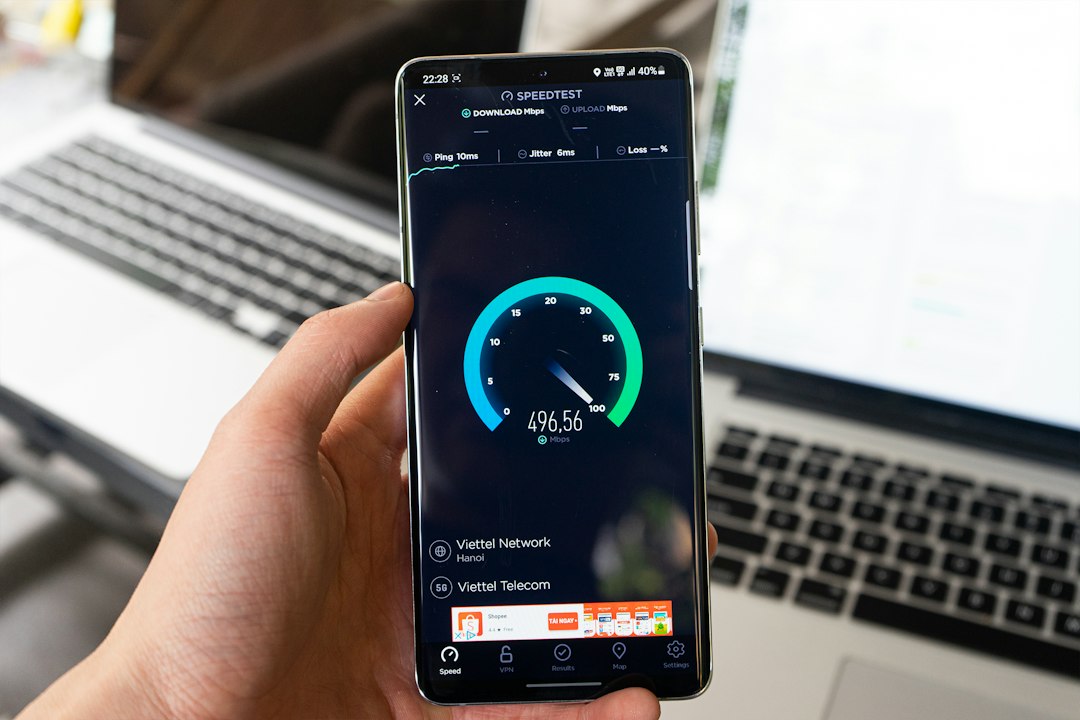
Here is where a lot of searches go wrong. Slow broadband is not covered by the automatic compensation scheme. Every provider spells this out: slow speeds, buffering, high ping, packet loss, an internet connection that drops in and out, or a weak signal in one room, none of these count as a total loss of service. If the line is technically working, the daily loss-of-service payment does not apply.
Slow speeds are dealt with under Ofcom's separate codes of practice on speed. When you sign up, a provider in those codes should give you an estimate of the speed you will get and a minimum guaranteed speed. If your actual speed falls below that guaranteed minimum and the provider cannot fix it within a set period, you generally have the right to exit the contract without penalty. That is the mechanism for slow speeds: a right to leave, rather than a daily cash payment.
So if your problem is speed rather than a dead line, the practical route is different. Run wired speed tests at different times of day, compare them against the minimum guaranteed speed in your contract, keep a record, and raise a formal complaint. The goal is either a fix or a penalty-free exit.
When you won't get compensation
The exclusions are broadly consistent across providers:
- It is not a total loss of service. Slow speeds, intermittent drops, poor call quality or a single device that will not connect do not qualify.
- The fault is inside your home. Problems with your own wiring, router, hub or phone are not covered.
- You caused the delay. Missing an engineer visit, refusing access, health and safety issues that block the engineer, or a landlord not granting permission in time can all cancel your eligibility.
- You didn't report it. For a total loss of service, you must report the fault while it is happening. A real case from rural Wiltshire showed the sting in this rule: BT declined to compensate a customer during a three-week area-wide outage because she had not reported the loss herself, even though the fault was known.
- You never accepted the earliest fix or rebooking date. Turning down the soonest available appointment can stop compensation.
- Causes beyond the provider's reasonable control. A line brought down by bad weather, for example, may be excluded.
One more detail worth knowing: if both your broadband and phone line go down together, you are usually compensated for one service, not both.
Which providers are signed up
The scheme is voluntary, but most major residential providers have joined. Those signed up include:
- BT
- EE
- Sky (and NOW)
- Virgin Media
- Vodafone
- Plusnet
- TalkTalk
- Hyperoptic
- Zen Internet
- Utility Warehouse
The live list can change, so check your provider's current policy and Ofcom's official list before you rely on a claim. If your provider is a smaller local full-fibre network, it may not be a formal signatory at all. Some alt-nets mirror the Ofcom daily rates in their own customer charter even so, but you will need to check their terms rather than assume the standard scheme applies.
How compensation is paid
In almost all cases, compensation arrives as a credit on your account rather than cash. The provider calculates what you are owed and applies it, then tells you by email or letter. Expect the credit within 30 days of the fault being fixed, the appointment being missed, or the service being activated.
The credit is normally used to reduce your next bill. If you have already left the provider, or the credit is larger than your outstanding balance, some providers transfer the remaining amount to your bank account. Vodafone, for instance, says any leftover credit after your final bill is settled goes back to your bank.
How to claim if you're not covered automatically
If your provider is in the scheme, the system should look after you, but keep your own records anyway: the fault reference number, the exact time you reported the problem, any messages from the provider, and the moment service returned. These records decide when the qualifying period ends and whether a credit should follow.
If your provider is not in the scheme, there is no automatic entitlement. Check its own terms and complaints code for what it offers, and complain in writing if you think you are owed something. Ofcom has also made clear that you should not be charged for a service you are not receiving, so if you have been billed the full monthly fee during a total outage, you can dispute that regardless of whether compensation is paid.
What to do if you disagree or want to complain
If you think the amount is wrong, or the credit never turned up when it should have, raise it with your provider first through its formal complaints process. Some providers give a window, for example telling you that if you have not been contacted about eligibility within 30 days, you have not been found eligible. Push back if you believe that is wrong and you have the evidence to show it.
If the provider will not budge and your complaint stays unresolved, you can escalate to an independent alternative dispute resolution (ADR) scheme. Every provider must belong to one, and the ADR service can look at your case and make a binding decision at no cost to you. Keep your fault reference, timeline and any correspondence, because a clear record is what makes a rejected claim worth challenging.
Julian Glover
Julian Glover covers UK home and business broadband, comparing providers, explaining new tech, and helping readers find the right deal for their household.