Broadband not meeting its minimum guaranteed speed? your UK rights and what to do
 Julian Glover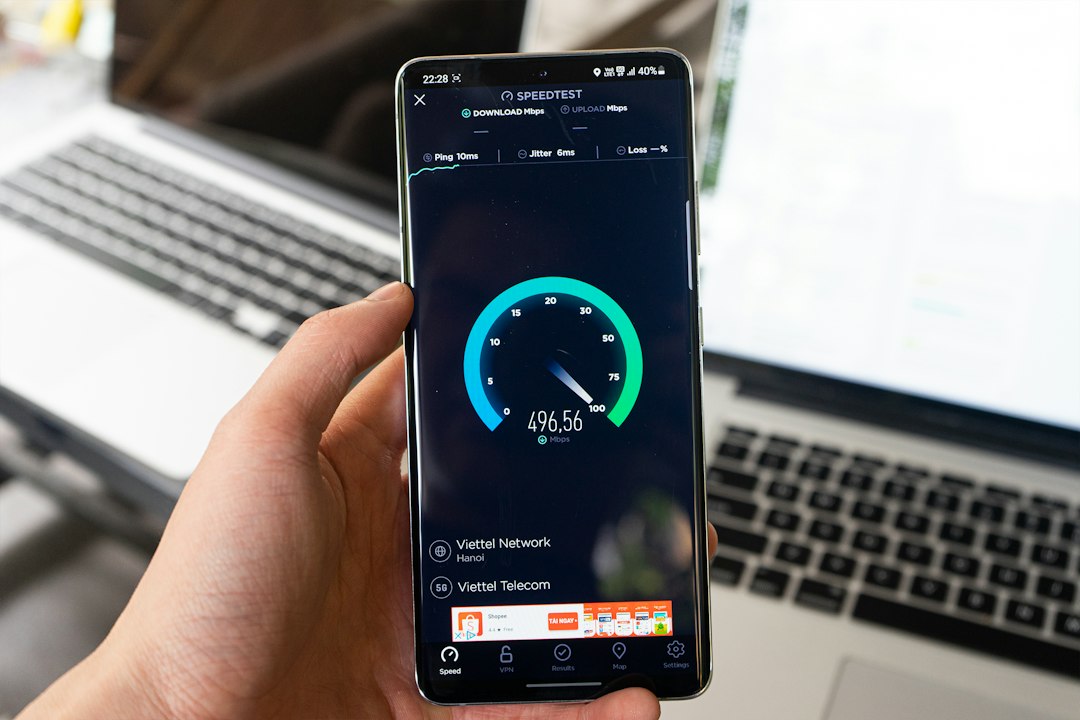
If your broadband keeps dropping below the speed your provider guaranteed you at sign-up, you are not stuck with it. Report the problem, let them try to fix it, and if they cannot sort it within 30 days you can usually walk away without paying an early exit fee. That is the short answer. The rest of this guide explains how the minimum guaranteed speed actually works, how to prove your speeds are too slow, what compensation you might get, and how to escalate if your provider drags its feet.
What a minimum guaranteed speed actually is
Your minimum guaranteed speed is the floor your provider promises your line will not drop below. It is a personal figure, tied to your specific property, and you should have been given it during the sales process, before you signed anything.
Crucially, it applies to the line coming into your home, measured at your router or hub, not to the Wi-Fi speed you get on a phone in the back bedroom. BT calls its version the Stay Fast Guarantee (older contracts used the term Minimum Guaranteed Access Line Speed). Virgin Media offers a minimum download speed guarantee to your Virgin Media Hub. EE gives you a personal speed guarantee to your hub. Different names, same basic idea.
How is the number worked out? Providers group together customers with similar lines, then look at the slowest performers in that group. BT explains it plainly: it takes the bottom 10 per cent of a group of comparable lines and sets the guarantee at the fastest speed within that slowest slice. So if 20,000 customers sit 3km from the exchange on the same product, BT looks at the 2,000 slowest and takes the best speed among them. Virgin Media does it differently, setting its guarantee at 50 per cent of the advertised speed for your package on the date you ordered.
Minimum guaranteed speed vs average and advertised speed
These three numbers are easy to muddle, and providers do not always make the distinction obvious.
- Advertised speed is the headline figure in the marketing. Under Advertising Standards Authority guidance, providers can only advertise a download speed that at least 50 per cent of their customers actually get at peak times (8pm to 10pm). Virgin, for example, calculates its advertised figure as the midpoint between the fastest and slowest speeds on its customer panel at peak times.
- Average or normally available speed is the range you can reasonably expect your hub to deliver at peak times.
- Minimum guaranteed speed is the worst-case floor. This is the only one that carries a service guarantee behind it.
An example from Choose shows how far apart the advertised and guaranteed figures can be, even on similar 100 to 150Mb full-fibre packages:
| Provider | Advertised speed | Minimum guaranteed speed |
|---|---|---|
| BT | 150Mb | 100Mb |
| Hyperoptic | 150Mb | 150Mb |
| NOW | 100Mb | 90Mb |
| Plusnet | 145Mb | 80Mb |
| Sky | 150Mb | 100Mb |
| TalkTalk | 150Mb | 120Mb |
| Virgin Media | 132Mb | 66Mb |
| Vodafone | 150Mb | 75Mb |
These are examples only, since your own guarantee depends on your property and location. But the gap is worth noting. Two providers on the same wholesale network can promise very different floors.
How to check your guarantee and test your actual speed
First, dig out your guaranteed figure. It was given at the point of sale and should be in your contract paperwork or online account. Providers with apps make it easy: in the EE app, for instance, you go to Manage, then Broadband, then "See what's included in your plan".
Now test properly, because a sloppy test is the single most common reason a complaint gets rejected.
- Use a wired connection. The guarantee covers the line to your hub, not Wi-Fi. A test over Wi-Fi on an older phone can read far below what is actually arriving at the router. As one industry writer puts it bluntly, you simply cannot push 900Mbps over a Wi-Fi signal outside a lab.
- Use the provider's own test where they insist on it. BT requires its official speed test and its fault checks before it will assess the guarantee. EE recommends its own app for the most accurate reading. Your independent test result may not be the number they accept.
- Leave the hub switched on. For the first 10 days after connection, speeds can fluctuate while the line stabilises, so BT will not accept speed faults inside that window. Keeping the hub on all the time helps it settle.
- Test more than once. Providers typically only treat a fault as claimable when the line repeatedly falls below the guarantee over several days. Virgin, for example, looks for speeds below its guarantee across three consecutive days, continuous or intermittent.
Turn off anything heavy on the connection while you test, such as a streaming TV box, so you are measuring the line rather than your own congestion.
The Ofcom code: what your provider must do
Much of your protection comes from Ofcom's voluntary Code of Practice on broadband speeds (the current version dates from 2022, with the big strengthening happening in 2018). Under the code, signed-up providers must:
- give you a personalised speed estimate based on your property, at the point of sale
- base those estimates on peak-time speeds between 8pm and 10pm
- give you a minimum guaranteed download speed
- let you exit without penalty if they fail to fix a speed that has dropped below that guarantee within 30 days
The word "voluntary" matters. Providers are not forced to join. According to Choose, the signatories are BT, EE, NOW Broadband, Plusnet, Sky, TalkTalk, Utility Warehouse, Virgin Media and Zen Internet.
The notable absentees include Vodafone, along with some smaller full-fibre networks such as Hyperoptic and Community Fibre. If your provider is not in the code, you have fewer of these specific protections, though Hyperoptic still chooses to offer a minimum guaranteed speed on all its packages. If you are with a non-signatory, your rights rest more on general consumer law and your contract terms than on the code.
The 30-day fix window and your right to leave penalty-free
Here is the sequence that leads to a penalty-free exit. Report the slow speed. Your provider gets a set period to fix it. If the fault is within their control and they cannot bring your speed back above the guarantee in time, you can cancel without an early termination fee.
The standard window is 30 calendar days, not working days, from when you notify them. BT's Stay Fast Guarantee uses 30 days (older BT contracts from before 1 March 2019 used 28 days). Virgin allows 30 days once speeds have been below the floor for three consecutive days.
Before you can exit, providers set conditions you have to meet. Typically you must:
- complete all the in-home checks their support team asks for
- allow at least one engineer visit
- give them the full fix period
- still be measuring below the guarantee on their speed test
One of the most useful details: the exit right covers linked services in the same bundle. BT confirms it applies to your phone line, broadband and TV (but not BT Mobile). Choose notes the same, so you are not left able to cancel the broadband but trapped in the TV or phone contract you bought at the same time.
Compensation, credits and refunds
This is where expectations need managing. The main remedy is the penalty-free exit, not a big payout.
Some providers do offer a fixed credit. BT's Stay Fast Guarantee typically pays £20 on a prepaid card if it cannot fix the fault, alongside the option to cancel. Sky, on any of its full-fibre packages, offers one month's broadband bill or the ability to exit without fees, with the guaranteed figure quoted at sign-up.
Wi-Fi guarantees are separate and can be more generous in their own narrow way. EE's WiFi Extender 7 Pro deal pays £100 if you cannot get 100Mbps of Wi-Fi in every corner of the house, but only after you have worked through diagnostics, possibly extra extenders and even an engineer visit, and you can claim it only once.
Note what these schemes do not do. There is no mechanism in UK broadband contracts to automatically pay you less because your line runs slow. Ofcom's automatic compensation scheme covers things like total loss of service and missed engineer appointments, not underperforming speeds. And the credits on offer are modest. As one commentator observes, a £20 card rarely makes up for weeks of unusable broadband, and switching provider takes time and effort of its own. Treat these guarantees as a backstop, not a performance promise.
How the major providers compare
BT (Stay Fast Guarantee): a personalised speed to your hub, guaranteed day or night. If BT cannot fix a fault within its control in 30 days, you get £20 on a prepaid card and can leave penalty-free (covering phone, broadband and TV). You must run BT's speed test and complete its checks first.
EE: a personal speed guarantee to your hub, with the right to exit without an early cancellation charge if EE fails to meet it. The £100 Wi-Fi credit is a separate WiFi Extender scheme and covers coverage inside the home, not the line.
Virgin Media: a minimum download speed guarantee to your Hub set at 50 per cent of the advertised speed on your order date. If speeds fall below it for three consecutive days and Virgin cannot fix it in 30 days, you may leave without an early disconnection fee. The guarantee does not apply to outages.
Sky: guaranteed figure quoted at sign-up, with one month's broadband bill or a fee-free exit if it falls short.
The common thread: every one of these applies to the line reaching your router, measured on the provider's own test, and only after you have jumped through their fault-checking hoops.
Are speed guarantees worth anything? The common gaps
They are real, and they can help, but the caveats are large enough that many people who lean on them feel let down.
- They cover the line, not your Wi-Fi. Patchy signal in the bedroom, an old laptop, or a hub tucked behind the TV are your responsibility, not a breach of the guarantee. Ringing up with a "slow Wi-Fi" complaint will not trigger a claim.
- They exclude in-home wiring and equipment. EE, for example, will not honour a claim caused by damage to equipment, faults with your home wiring, or poor hub placement.
- They exclude things outside the provider's control. If the cause is not the network, you get advice on improving things rather than an exit.
- They need repeated, evidenced failures. A single bad afternoon will not qualify. You need failures across several days on the provider's own test.
- The compensation is small. A £20 credit or one month's bill is the ceiling for most people.
Step by step: how to complain and escalate
- Confirm your guaranteed speed. Find the figure you were given at sign-up.
- Run a proper test. Wired to the hub, using your provider's official test, ideally at peak time (8pm to 10pm), on more than one day. Save the results.
- Report it and log the date. This is what starts the clock on the fix window.
- Complete every check they ask for. In-home diagnostics and at least one engineer visit are usually mandatory before any exit or credit.
- Give them the fix period. Around 30 days for current contracts.
- Claim your remedy. If they cannot fix a fault within their control, ask for the credit where one applies (for example BT's £20 card) or exercise your penalty-free exit, including any bundled TV and phone.
- Escalate if you hit a wall. If your provider will not resolve the complaint, you can take it to an approved alternative dispute resolution (ADR) scheme, the Communications Ombudsman or CISAS depending on which one your provider belongs to. You can normally escalate once the complaint has gone unresolved for eight weeks, or sooner if the provider issues a deadlock letter.
A few honest answers
Can I get money back for past slow months? There is no automatic pay-per-speed refund in UK broadband contracts. Your remedies are the specific credits providers offer (where they apply) and the penalty-free exit.
Can I get a partial refund just for being unhappy with the speed? Demanding a discount because the connection is not as fast as you would like is unlikely to work. The protection kicks in when you drop below the guaranteed minimum and the provider cannot fix it.
Can I cancel the whole bundle? Yes, where the code applies. The penalty-free exit extends to linked services such as home phone and TV bought at the same time, though check the specifics (BT excludes BT Mobile, for example).
What if my provider is not in the code? Then you rely more heavily on your contract terms and general consumer law rather than the code's exit and estimate rules. Check whether they offer any guarantee of their own before you assume you have none.
Julian Glover
Julian Glover covers UK home and business broadband, comparing providers, explaining new tech, and helping readers find the right deal for their household.