How to get broadband with no phone line or master socket in the UK
 Julian Glover
You can get home broadband without an active phone line, and depending on the technology, without any physical master socket in the property at all. Full fibre (FTTP), plus 4G and 5G home broadband, need no copper phone line and no traditional wall socket to work. That directly answers the two most common worries behind this search: no landline number, and no existing installation to plug into.
The reason this now works so cleanly is that the UK's old telephone network is being retired. Openreach and other providers are moving everyone onto a fully digital system, so a growing share of new connections simply do not rely on a phone line any more.
Can you get broadband without a phone line or master socket?
Yes. There are two slightly different questions hiding inside this one, and it helps to separate them.
The first is whether you can get broadband without a landline number and without paying line rental. You can. Full fibre broadband doesn't use copper phone wires, so you don't need a traditional landline at all. If you'd still like a home phone, you can add a digital service that makes calls over the broadband instead.
The second is whether you can get broadband with no physical socket installed in the property. This matters most for new-builds, converted flats, and homes where the old phone wiring has been removed or never existed. Here the answer depends on the technology. Full fibre brings its own new equipment into the home. Mobile broadband needs no fixed wiring whatsoever. Only the older copper-based options still depend on a working phone socket.
Phone line, line rental and master socket: what actually matters
Three things often get bundled together and confused:
- An active phone line is a working landline that can make and receive calls, with a number attached.
- Line rental is the monthly charge for keeping that phone line active. On full fibre and mobile broadband there is nothing to rent, so this cost disappears.
- A master socket is the physical wall socket where a copper phone line enters your home. It is where older broadband plugs in.
You can have broadband with none of these. You can also have a phone line sitting unused while your broadband runs over something completely separate. Because mobile broadband doesn't need a landline to work, it even leaves any existing line free for another provider to use if you want.
Broadband types that don't need a phone line
There are three practical routes to a home connection with no landline:
- Full fibre (FTTP) for the fastest, most reliable option.
- 4G or 5G home broadband for the simplest, socket-free setup.
- Cable broadband in areas where it is available.
Each suits different homes and budgets. The older copper technologies still work, but they are the ones that keep you tied to a phone socket.
Full fibre (FTTP): no copper line, no master socket needed
Full fibre runs a fibre-optic cable directly into your home, completely separate from the old phone network. It offers the fastest and most reliable connection you can get, with speeds reaching up to around 900 Mbps, and it is the most future-proof choice as the copper network is switched off.
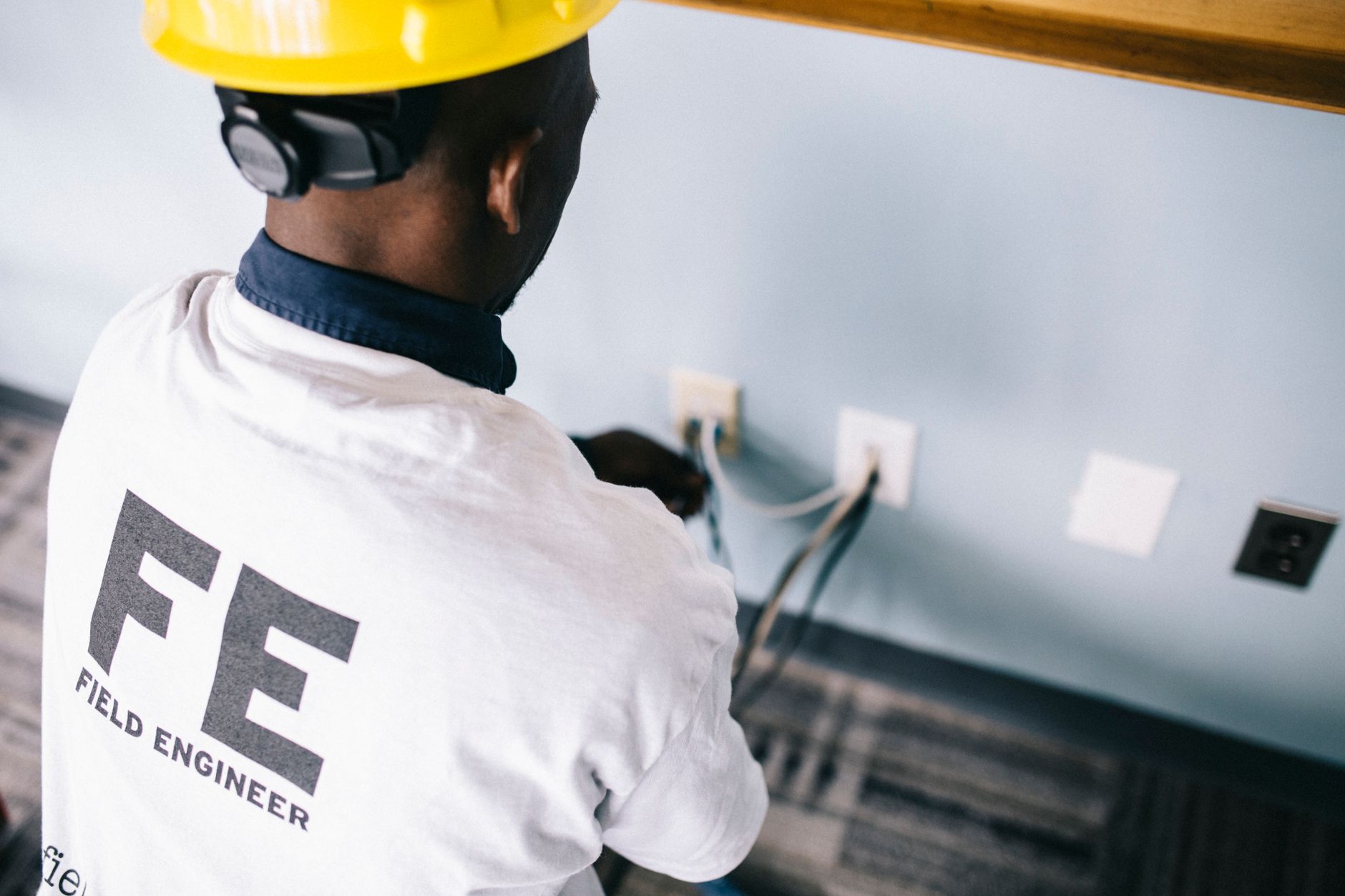
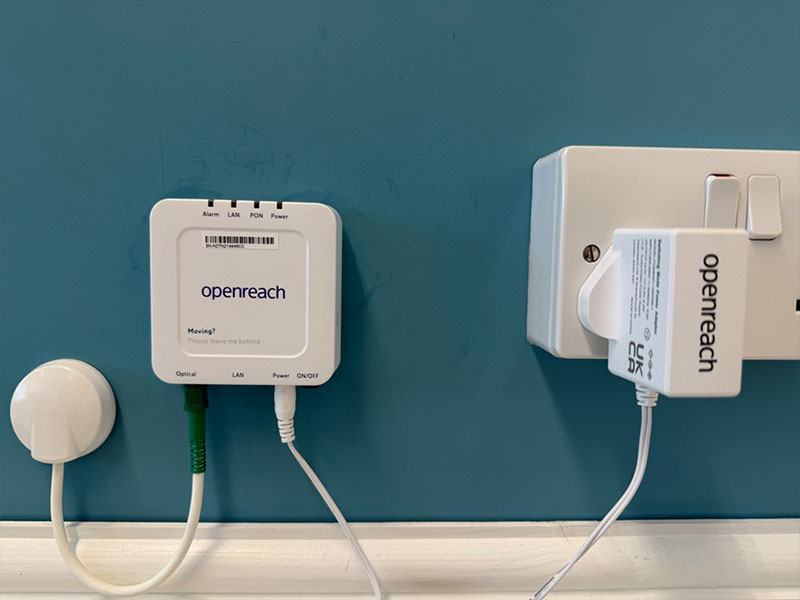
Because it is a new connection, full fibre usually needs an engineer visit to bring the fibre into the property and fit a small box on the wall. That is the bit renters and new-build residents most often ask about. There is no dependence on an old master socket. If the fibre isn't already there, the engineer installs what is needed.
Coverage has grown fast. Full fibre now reaches 82% of UK homes, which is about 24.9 million properties, up from 78% in mid-2025. Openreach alone is rolling it out towards 25 million homes and businesses, supporting the government's aim of gigabit-capable broadband reaching more than 99% of premises by 2032. Availability varies by nation: Northern Ireland is furthest ahead at 95%, England and Wales sit at 82%, and Scotland at 75%.
4G and 5G home broadband: the simplest no-socket option
If you can't get fibre yet, or you want something that works the day it arrives, mobile home broadband is the easiest answer. It uses 4G or 5G signals through a router with a SIM card inside, sometimes called Fixed Wireless Access. The router picks up a mobile signal and turns it into Wi-Fi for your home. No landline, no line rental, no engineer, no wiring.
You plug it in and you are online, often with next-day delivery. That makes it a strong fit for renters, students and anyone on a shorter contract, or people moving house who don't want to wait weeks for a line to be installed.
The trade-off is that speed and stability depend entirely on the mobile signal where you live, and some plans carry data limits. Coverage is expanding quickly. Outdoor 5G now reaches between 76% and 94% of premises depending on the operator, and 4G geographic coverage across the networks has risen to the high 80s and 90s. Fewer than 39,000 UK premises (0.1%) now can't get a decent broadband service once wireless options are included.
Cable broadband without a landline
Where it is available, cable broadband is another gigabit-capable route that doesn't depend on a traditional copper phone line. A lot of the UK's gigabit coverage comes from Virgin Media's upgraded Hybrid Fibre Coax network, which is why 89% of homes (around 27.1 million) can now reach a gigabit service, a higher figure than full fibre on its own. In many urban areas both cable and full fibre are available, giving you a choice.
When you still need a socket: ADSL and FTTC explained
The older technologies are the reason the phone socket ever mattered.
ADSL is standard broadband delivered over the old copper phone line, plugged into your master socket. FTTC, or fibre to the cabinet, is part-fibre: fibre runs to your local street cabinet, then copper covers the final stretch to your home, still through the phone socket.
There is a middle option worth knowing about. SoGEA (Single Order Generic Ethernet Access) uses that same street-cabinet fibre with copper for the last hop, but comes with no phone service attached. It has good UK availability and offers superfast speeds, though it can't match full fibre at the top end. It is a genuine broadband-only package even though it still uses some copper.
All of this is being phased out. Openreach is retiring its copper and Wholesale Line Rental products as the traditional telephone network is switched off. The plain difference between full fibre and part-fibre is where the fibre stops: all the way to your home, or only to the cabinet with copper for the rest.
Broadband-only deals and providers to consider
Several providers offer connections with no landline. How they do it varies:
| Provider | Technology | Landline required? | Engineer visit? |
|---|---|---|---|
| EE | Fibre broadband | No, calls not included; add a digital phone if wanted | Depends on setup |
| TalkTalk | Full fibre, part-fibre, ADSL | Not for full fibre; add Digital Voice for calls | Some services may need one |
| Three | 4G/5G home broadband | Never, always landline-free | No engineer |
| Zen | Full fibre, SoGEA | Not for full fibre or SoGEA | Depends on service |
| Virgin Media | Cable (HFC) | No phone line needed | Typically yes |
With full-fibre and mobile options, calling features are added digitally rather than through a rented line. On EE fibre without a landline, for example, your old number won't work and there is no dial tone, so you must have another way, such as a mobile, to reach emergency services.
Is it cheaper to drop the landline?
Sometimes, but not always. If you aren't using the landline for anything else, going without one can work out cheaper because you avoid the line rental fee. But broadband-only deals can cost the same as broadband-with-landline in some areas, depending on availability, speed and the plan.
Watch for annual price changes too. Providers often raise monthly prices each April, so factor that into the real cost over a contract rather than judging by the headline figure alone.
How to check what's available at your address
Because coverage differs street by street, check across more than one technology before you commit:
- Check full fibre and part-fibre using Openreach's availability checker with your postcode and address. This tells you whether FTTP, FTTC or copper is at your property.
- Check cable separately with Virgin Media, since it runs on its own network.
- Check 4G and 5G using the coverage checkers from mobile providers like Three, which show the signal at your address.
- Compare the results on speed, contract length and price rather than the first deal you see.
If you rent or live in a new-build with no existing installation, mobile broadband gives you an immediate option while you find out what fixed connections can be brought to the property.
Which option should you choose?
If full fibre is available, it is the strongest long-term choice: fastest, most reliable and built for a future with no copper. If it isn't there yet, SoGEA or cable can still give you good broadband-only speeds. And if you want something with no wiring, no waiting and no commitment to a fixed line, 4G or 5G home broadband gets you online quickly, as long as the mobile signal where you live is solid.
The common thread is that a phone line and a master socket are no longer the gatekeepers to getting online. For a large and growing share of UK homes, they simply are not part of the picture any more.
Julian Glover
Julian Glover covers UK home and business broadband, comparing providers, explaining new tech, and helping readers find the right deal for their household.