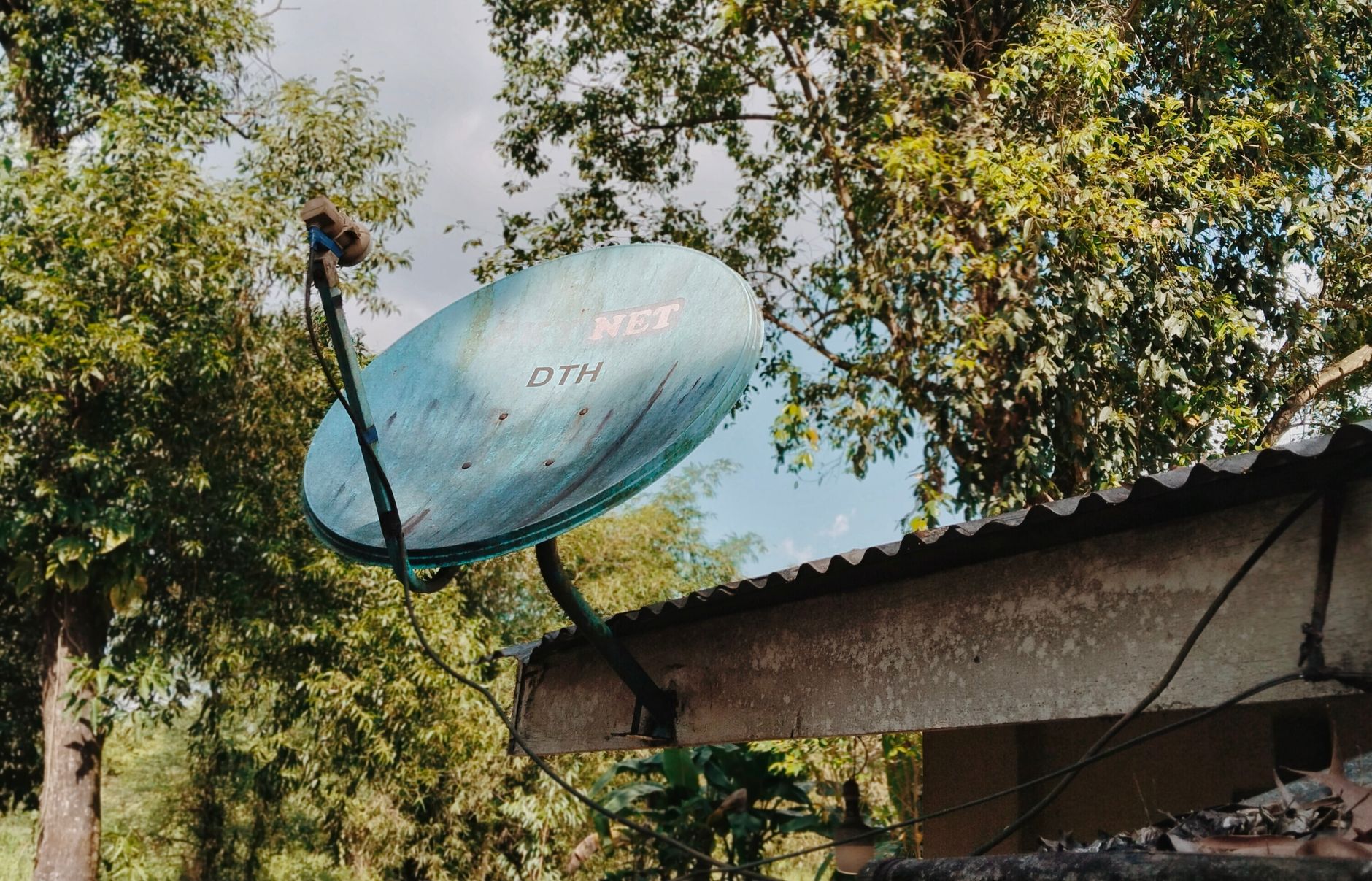
Does weather affect your broadband? Rain, heat and storm faults explained

If your broadband slows to a crawl or drops out every time the heavens open, you are not imagining it. Weather can genuinely affect a UK broadband connection, but it depends almost entirely on the type of line coming into your home. On older copper-based connections, rain is one of the most common culprits behind sudden slowdowns and dropouts. On full fibre, you will rarely notice a thing.
Here is the honest short version: for most people on most days, a dodgy connection on a wet afternoon is not the rain at all. It is usually something inside your home, like too many devices or a badly placed router. But when the weather is severe, or when your line already has a weakness, rain and storms really can bring it down.
Can weather really affect your broadband?
Yes, though it does not happen very often. Severe conditions such as torrential rain, strong winds, flooding, lightning and major storms can occasionally cause problems with broadband infrastructure. This is far more likely on older connections that rely on phone lines or exposed copper cables, which are simply more vulnerable to the elements.
When these disruptions do happen, network engineers usually resolve them fairly quickly. And your router itself sits safely indoors, protected from rain, wind and temperature swings. So if your Wi-Fi feels sluggish on a drizzly Tuesday, the weather is probably not to blame. The slowdown often has a much simpler cause, like several people streaming, gaming, working from home or downloading large files at once.
Why rain is the most common culprit
Of all the weather that affects broadband, rain causes the most trouble. Moisture can seep into underground copper lines, street cabinets and the joints where cables connect. That water disrupts the electrical signals carrying your internet.
It does not take a downpour either. Even light, persistent drizzle can build up over time and cause intermittent faults, especially on older copper-based connections. That is why a wet-line fault can be so maddening to pin down: it comes and goes, and it may only misbehave after a spell of rain rather than during it.
The weak point: overhead lines, copper and water ingress
Copper lines carry your broadband as an electrical signal, and electricity and water do not mix well. When moisture gets into a copper connection, whether through a cracked cable sheath, a corroded joint or a flooded underground duct, it interferes with that signal. The result is slower speeds, more errors and dropped connections.
Overhead lines add their own risks. Strong winds can sway or damage overhead cables, loosen connectors or knock out entire poles. During severe storms, falling trees and debris can snap lines completely, causing outages for a whole street. Even where there is no visible damage, vibration and misalignment can quietly reduce your signal strength.
Full fibre works differently. It carries data as pulses of light through glass fibres rather than electrical signals through copper, so it is far less vulnerable to water and electrical interference. It can still be physically broken by a falling tree or affected by a power cut, but it does not degrade in the rain the way copper does.
Does your connection type matter? ADSL vs part fibre vs full fibre
It matters enormously. Here is the rough order of vulnerability:
- ADSL and FTTC (part fibre): High sensitivity. These rely on copper for some or all of the run to your home, so they are very vulnerable to moisture, interference and physical line damage. FTTC runs fibre to the street cabinet, then copper for the last stretch, and that copper is the weak link.
- Full fibre (FTTP): Low sensitivity. Because transmission is light-based, interference is far less likely to be an issue. This is why full fibre is widely regarded as the UK's most reliable broadband technology.
There is a bigger picture here too. The UK's traditional analogue phone network, the Public Switched Telephone Network (PSTN), is being phased out and replaced with digital services using Voice over Internet Protocol (VoIP). That transition is expected to be completed by January 2027. As the copper network is retired and full fibre spreads, a lot of rain-related faults will simply disappear, because the copper that causes them will no longer be in the ground.
Line problems vs Wi-Fi problems: how to tell the difference
People use "broadband" and "Wi-Fi" as if they are the same thing. They are not, and the distinction is the key to diagnosing a weather fault.
Your broadband is the line that brings the internet into your home from your provider. That physical connection, above or below ground, is exposed to the elements. Your Wi-Fi is the wireless signal your router broadcasts around the house. Your router is indoors and the weather cannot touch it directly.
So if the weather is involved at all, it is almost always affecting the line, not the Wi-Fi. A simple test: plug a device directly into the router with an Ethernet cable. If the connection is still dropping when you are wired in, the problem is likely the line coming into your home. If the wired connection is rock solid but Wi-Fi is patchy, your trouble is inside the house, and the rain is a coincidence.
Other weather effects: wind, heat, cold and lightning
Wind and storms are mainly a threat to overhead lines and outdoor equipment, as covered above.
Heat rarely causes noticeable problems for most homes. Broadband equipment is built to cope with everyday warm spells. In prolonged heatwaves, routers, street cabinets and fibre nodes can overheat, which can throttle speeds or cause temporary disconnections, though many cabinets have active cooling to keep things stable. One study by Broadband.co.uk found that on the UK's hottest days download speeds dipped by up to 8 per cent and upload speeds sometimes dropped by as much as 27 per cent. At home, give your router some breathing room rather than cramming it into a tight cupboard.
Cold and snow alone rarely affect performance, and fibre is generally very stable in cold conditions. The risk comes from physical damage, such as fallen trees, ice on external infrastructure or waterlogged and frozen ducts.
Lightning is the hidden hazard. Electrical storms can push voltage spikes into a broadband line and potentially damage routers, modems or internal circuitry. Even without a direct strike, the electrical interference can cause random disconnections. Power surges can also harm home equipment plugged into unprotected sockets, so a surge protector is a sensible precaution.
How to diagnose a weather-related drop at home
Work through this when the trouble starts:
- Note the pattern. Does it only misbehave during or shortly after rain, wind or storms? A consistent link to the weather points to the line, not your kit.
- Go wired. Connect a laptop or computer to the router by Ethernet cable and test. Problems on a wired connection point to the line; a flawless wired connection points to Wi-Fi.
- Check for a full outage. See whether phone and internet are both down, or whether it is just slow. A total loss matters for your fault report and any compensation.
- Look outside after a storm. Check that cables into your property are secure and undamaged. Report any visibly damaged street cabinets or downed cables.
- Rule out the inside. Thick walls, metal objects, furniture blocking the router and too many connected devices all hurt Wi-Fi regardless of weather. Move the router to an open, central spot and test again.
How to fix or reduce the problem
If the fault is inside your home, a few simple changes help: keep the router in an open, central location, keep it away from large metal objects and furniture, limit how many devices are hammering the connection at once, and make sure all cables are secure after high winds.
If the fault is on the line, the long-term fix is the connection type. Full fibre is far more resilient to extreme weather than copper, as well as faster and more consistent. If FTTP is available at your address, upgrading largely removes the rain problem at its root.
When to report a fault to your provider
Report visible damage straight away. If a storm has brought down a cable or damaged a street cabinet, or your connection has dropped for an unusual length of time, flag it to your provider. The sooner it is reported, the sooner it can be repaired.
You may also be entitled to automatic compensation. Under the industry scheme, if you have a total loss of service and it is not fixed within two working days of reporting it, you are owed compensation for each extra day you are offline. With BT, for example, that is £10.34 for each day beyond the two working days, credited automatically within 30 days, with no need to claim. Total loss means you cannot make or receive calls, or cannot get online through your broadband at all. Note the limits: an intermittent fault that cuts in and out does not usually qualify, nor does a fault inside your own home, nor a delay caused by you missing an engineer appointment.
The same scheme pays out for other failures: around £6.46 a day if a new service is activated late, and around £32.31 for a missed engineer appointment or one changed with less than 24 hours' notice. Rates are reviewed each year in line with the Consumer Price Index. Compensation for a single issue can run for up to 60 days, and if your provider cannot resolve it within 30 days you have the right to leave with no termination charges.
Behind all this sits Ofcom, the independent regulator, which sets and enforces the rules on service continuity and can investigate failures and fine providers that fall short.
FAQs
Can weather actually affect my broadband connection? Yes, but mostly in severe conditions and mostly on older copper lines. Everyday British weather rarely causes problems for modern networks.
Why does my broadband drop specifically when it rains? Usually because water has got into a copper line, a joint or a street cabinet and is disrupting the electrical signal. Even light, repeated drizzle can cause intermittent faults on older connections.
Does full fibre fix rain-related drops? Largely, yes. Full fibre uses light through glass rather than electricity through copper, so it is far less affected by moisture and interference, though it can still be physically damaged.
Is it my broadband line or my Wi-Fi? Plug a device into the router with an Ethernet cable. If the problem persists when wired, it is the line. If only Wi-Fi is affected, the trouble is inside your home and the weather is likely a coincidence.
When can I claim compensation for being offline? If you have a total loss of service that is not fixed within two working days of reporting it, you are entitled to automatic daily compensation, paid without you having to claim.
More on more guides
All guides on this topic →
Julian Glover
Julian Glover covers UK home and business broadband, comparing providers, explaining new tech, and helping readers find the right deal for their household. Julian is the editor and byline for our reviews, guides and news.