Do you still need a phone line in the UK? the rules explained
For most UK households, the short answer is no. You do not need an active landline phone service to get broadband, and increasingly you do not need a copper phone line at all. Whether a line is involved comes down to the type of connection reaching your home, not whether you ever pick up a handset.
At the same time, the whole analogue phone network behind traditional landlines is being switched off. That makes the question timely, and a little confusing, so it is worth untangling the two issues: what broadband actually needs, and what is happening to the old telephone system.
Do you still need a phone line in the UK?
Nobody is being forced to give up a home phone. The government has been clear that no one has to lose their landline service, and there will still be a 'landline only' option for people who do not want a general internet connection.
What is changing is how the phone service is delivered. The old copper network is being retired, so your landline will move to a digital service that runs over an internet connection. You can keep a home phone. You can keep your number in most cases. But the technology underneath it is changing.
For broadband specifically, the key point is this: a landline is defined two different ways, and people mix them up. One is the physical copper cable coming into your home. The other is the phone service and call plan you use to make calls. You might need one of those and not the other, and with modern connections you may need neither.
The move from analogue to digital landlines
The UK's fixed telephone network has run on analogue technology for decades, built around the Public Switched Telephone Network, or PSTN. The Integrated Services Digital Network (ISDN), also used for phone services, is being switched off too.
The industry announced its intention to retire these networks back in November 2017. For most customers, the upgrade is expected to be complete by the end of January 2027. BT, which originally expected most of its customers to have moved by December 2025, now expects all of them to have switched by the end of January 2027.
The reason is straightforward. The analogue network has reached the end of its serviceable life, and parts are increasingly hard to find because suppliers have stopped making them. Ofcom reported that 2023 saw 20% more service incidents on the PSTN than 2022, and a 60% rise in the service hours lost to customers. The replacement, digital voice running over an internet connection, promises clearer calls and features such as anonymous caller rejection and three-way calling. The cables are also waterproof, so the service is more resistant to storm damage.
This is not a government programme. It is led by the phone and broadband companies, working with Ofcom, the communications regulator, whose job is to make sure customers are not harmed or needlessly disrupted. If you want to know exactly when your line will change, ask your own provider.
Broadband without a landline: what's possible now
Whether your broadband needs a copper line depends entirely on how it reaches you.
ADSL and fibre-to-the-cabinet (FTTC) both rely on the old copper telephone network for the final stretch into your home. FTTC carries data along fibre to a street cabinet, then switches to copper wires from the cabinet to your property, which is why the speed you get drops the further you are from the cabinet. For these connections there must be a working copper line, whether or not you ever use it for calls. ADSL is a fading technology: Ofcom data showed pure ADSL subscriptions fell by 115,000 in a single quarter in 2025.
Full fibre (FTTP) runs a brand-new fibre optic cable directly into your home and bypasses the copper network completely. No phone line is needed, no exceptions. It is faster and more reliable, with speeds up to around 900 Mbps on some packages and 1 Gbps or more on others. As of the third quarter of 2025, 77.9% of UK fixed broadband lines were fibre-based, either FTTC or FTTP.
Cable broadband from Virgin Media uses its own coaxial network, entirely separate from the copper phone system, so no Openreach line is involved. Average download speeds of 270.6 Mbps were recorded in 2023. The catch is that it is only available where Virgin Media has laid its network.
4G and 5G home broadband uses the mobile networks, so no fixed line of any kind enters the property. It is popular in rural areas and for people who want flexibility, though speeds vary with signal strength and congestion. Satellite broadband, such as Starlink, also needs no phone line and tends to be used where nothing else is available.
The gap between lines and phones is already large. Ofcom's figures for the third quarter of 2025 counted 29.2 million fixed broadband lines but only 22.0 million fixed voice line subscriptions. That difference of more than 7 million means millions of homes are already online without a working landline.
One word of warning. 'Fibre' gets used loosely in marketing, and some providers sell part-copper FTTC as 'fibre broadband'. If you want a connection with no phone line involved at all, check that you are being offered FTTP, sometimes called full fibre.
What the digital switchover means for your home phone
If you keep a home phone, the day-to-day experience will mostly stay the same. The difference is that calls will travel over your broadband connection using Voice over Internet Protocol (VoIP), branded by some providers as Digital Voice.
Your provider will contact you before your switch, so you do not need to do anything until you hear from them. Watch out for that communication and do not mistake it for marketing. For most people the change is simple: if you already have broadband, you may just plug your phone into the router instead of the wall socket, or your provider will send an adapter. If you have several phone sockets with separate handsets, you may need more than one adapter.
A few things to note. You will generally need an internet connection to make calls once you have switched, because the digital service runs over broadband. If you do not have broadband and your provider asks you to switch, they must supply a connection to support the digital phone service, and you should not pay extra for it if you do not want to take a broadband service. After switching, you may have to dial the full area code even for local numbers. In most cases you can keep your existing number.
If your landline and broadband are with different companies, you will have the choice to move both to one provider when you switch. And although everyone has to move eventually, you may be able to delay if you are not ready.
Keeping a home phone: Digital Voice and VoIP
Digital Voice is simply BT's name for its internet-based home phone service. VoIP is the underlying technology, and other providers use their own branding. In plain terms, instead of your voice travelling down a dedicated copper wire, it is carried as data over the same broadband connection you use for everything else.
Some providers may stop offering a home phone altogether. If yours does and you want to keep a landline phone, you might have to move to a provider that still offers one, which could cost more than your current deal. If keeping a home phone matters to you, check what your provider intends to do before your switch date.
Power cuts and emergency calls: what to know
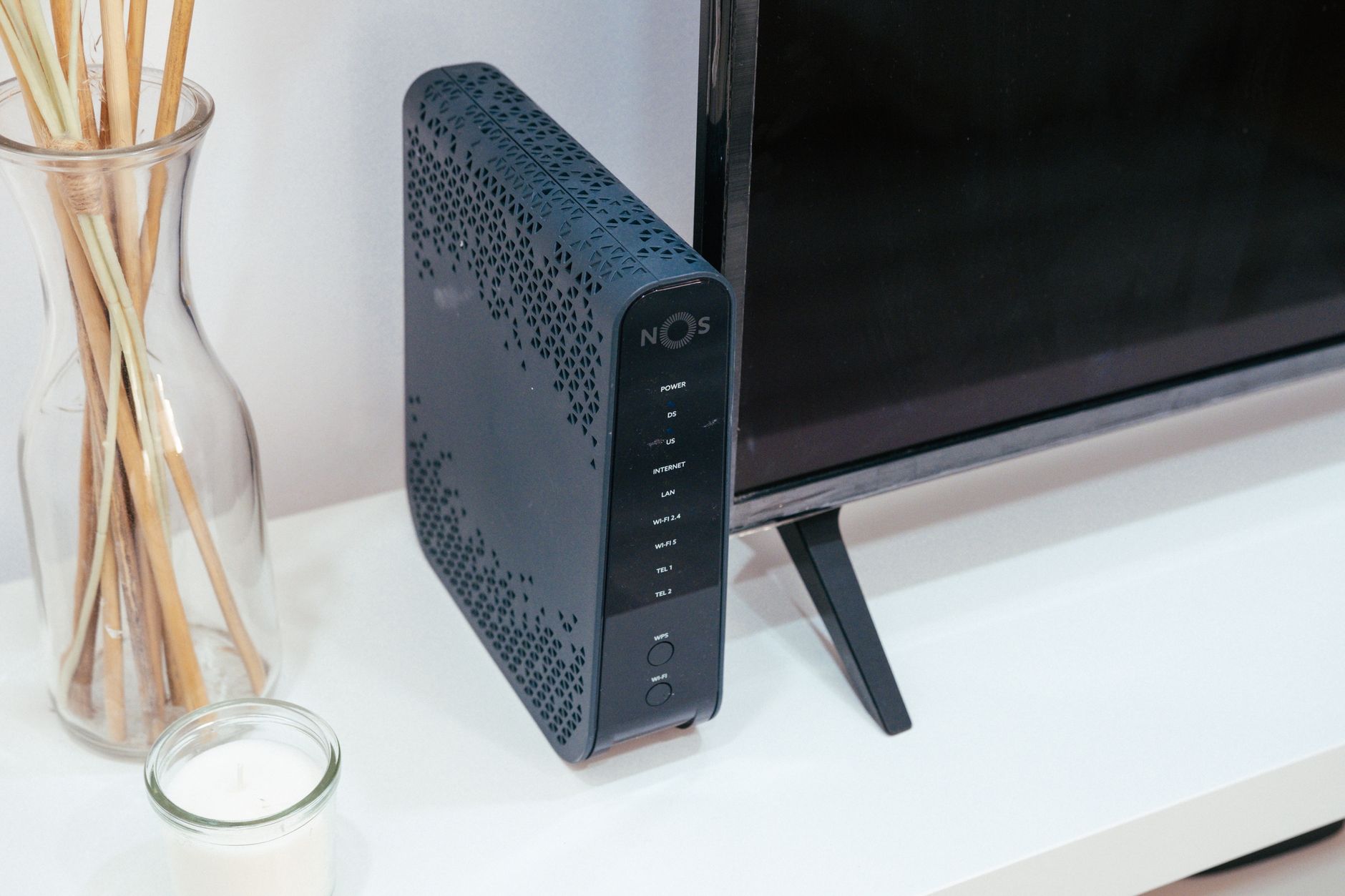
This is the single most important practical difference with a digital landline. Because the service runs over your broadband router, and the router needs mains power, your phone will not work in a power cut unless you have a backup.
With an old analogue line, the phone drew power from the network itself and kept working when the lights went out. A digital line does not. So you need an alternative for emergencies, such as a mobile phone or a battery backup unit for the router.
There are protections built into the rules. It is the responsibility of your communications provider to give anyone who depends on their landline a resilient solution that still allows 999 calls during a power outage, and the government is working with Ofcom to make sure that happens. If you rely on your phone for emergencies, tell your provider so they can arrange suitable backup.
Support for vulnerable and elderly users
Ofcom has published guidance on treating vulnerable customers fairly and expects providers to identify and support at-risk customers throughout the switch. If you, or a relative, are vulnerable or depend on a landline, tell your provider so they can advise how the migration will affect you.
BT has been switching lower-risk customers first, for example those who have not used their landline in the last 12 months, and only from spring 2025 at the earliest began contacting customers known to be vulnerable or with additional needs, and then only in areas where telecare alarms can be identified and supported.
There is a wider safety net too. In December 2023 the leading providers, including Sky, BT, Virgin Media O2 and TalkTalk, signed a Charter of commitments to protect telecare users and other vulnerable customers. In January 2024 the Telecare Action Board was formed, bringing together around 30 organisations from government, the telecoms and telecare sectors, local authorities and regulators. A second Charter for network operators followed in March 2024, under which companies such as Openreach, CityFibre and CommunityFibre committed to making sure telecare customers have compatible solutions after the upgrade.
Telecare and alarm users, read this
If you have devices plugged into your phone line, such as a personal alarm, a telecare device, a medical alert system or even a fax machine, do not assume they will keep working after the switch. You may need to upgrade the device so it is compatible, check whether it needs its own battery and network backup, or buy an adaptor.
Local authorities and telecare providers are being asked to share, under data sharing agreements, which lines have telecare devices on them, so that providers can protect those customers. But the safest step is to contact your provider or the device manufacturer directly and confirm your equipment will still work. Make sure your provider knows you have a telecare alarm or need extra support.
How to get a phone line or broadband installed
If your home has no phone line, that is not a barrier to getting online. Full fibre can be installed where no existing line exists, because a fibre cable is run directly to the property and no copper line is needed. The work is handled by Openreach or the relevant network partner.
Some homes are ready to connect straight away. Others need a one-off installation appointment, and availability depends on your location. The sensible first move is to check what is actually available at your address before you commit to a package.
Costs: line rental versus line-free broadband
Cancelling a landline does not always shrink your bill, which surprises people. The old landline itself was often effectively 'free'; it was the call plans that cost extra. With older broadband types, the cost of maintaining the copper line was usually bundled into the package, which is why it felt unavoidable.
Since a 2016 ruling by the Advertising Standards Authority, backed by Ofcom, providers must include any mandatory line rental cost within the advertised price rather than adding it separately. So Sky, for example, now folds line access into the total package cost instead of charging a visible line rental on top.
With a genuine full fibre broadband-only deal, you are paying for the internet connection, the speed you choose and the kit and support you need, with no phone service you do not use. Where you are currently paying for services you never touch, dropping to line-free full fibre can be cheaper. But because line costs are already baked into most advertised prices, the saving is not automatic. Compare the full price of a broadband-only full fibre deal against your current package rather than assuming the line was a separate charge you can simply remove.
More on landlines and home phone
- How to get broadband with no phone line or master socket in the UK
- Openreach stop sell explained: can you still get a landline in the UK?
- Can I keep my landline number when switching broadband? UK guide
- Fibre Broadband Without a Landline in the UK
- Unlimited Phone Calls and Broadband Packages UK: Top UK Provider Comparison
- Best Broadband for Video Calls in the UK

Julian Glover
Julian Glover covers UK home and business broadband, comparing providers, explaining new tech, and helping readers find the right deal for their household. Julian is the editor and byline for our reviews, guides and news.