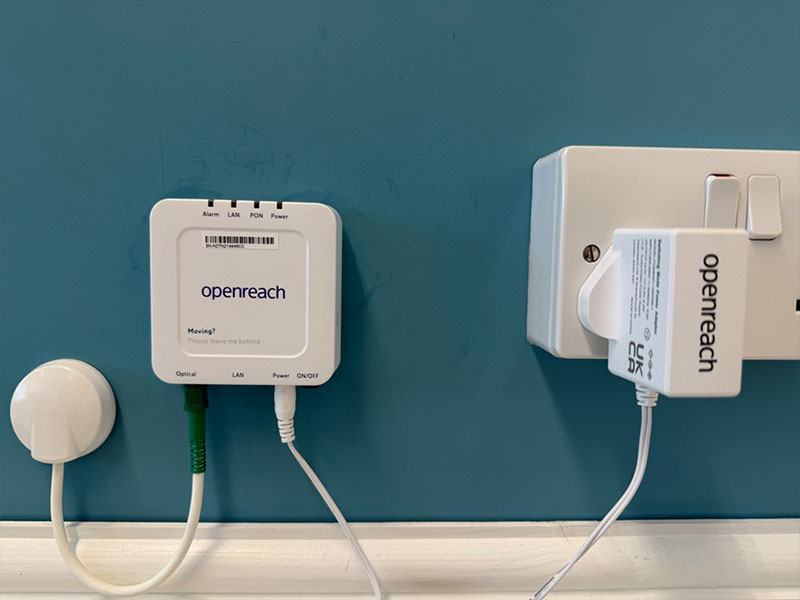
Charged for an old router after switching broadband? your UK rights and how to avoid the fee
 Julian Glover
If you have switched broadband and found an unexpected charge on your final bill for the router you left behind, the first thing to know is that it can be legitimate. Several big UK providers no longer give you the router. They lend it to you for the length of your contract and expect it back when you leave. Miss the return, and they bill you.
But a charge being possible is not the same as a charge being correct. Plenty are applied when the kit was in fact returned, or when the customer was never told to send anything back. This guide sets out who charges what, how long you have to post the router, and exactly how to dispute a fee you think is unfair.
Can you be charged for keeping your old router?
Yes, if your contract says the provider owns the equipment. This is the crucial point. When a company keeps ownership of the router and set-top box it sends you, it is entitled to ask for them back at the end of the contract and to charge you if they are not returned.
BT moved to exactly this model. Since December 2019, BT's contracts have stated that the company keeps ownership of the wi-fi routers and TV set-top boxes it sends to customers, and it will bill new customers who do not send the router back at the end of their contract. BT framed the change as a way to cut waste, saying it would refurbish returned kit so it could be reused. It estimated the policy would stop around a million set-top boxes and routers a year going to landfill.
So the charge is not a penalty plucked from nowhere. It reflects the fact that the router was never yours to keep. Whether a specific charge stands up depends on what your contract actually said and whether you were given a fair chance to return the equipment.
Which UK providers keep the kit
Router return rules vary, and they change over time, so always check your own contract and order confirmation. Based on the policies described here:
| Provider | Ownership and return |
|---|---|
| BT | Keeps ownership of routers and set-top boxes; expects them back at the end of the contract |
| EE | BT confirmed the return policy would extend to its EE subsidiary |
| Plusnet | BT confirmed the return policy would extend to its Plusnet subsidiary |
| Virgin Media | Already operated a similar return policy before BT introduced its own |
BT told the BBC that the change would eventually apply to EE and Plusnet as well, and that Virgin Media already ran a comparable scheme.
One quirk worth knowing: BT, like many providers, locks its routers to its own network, so a returned BT router cannot simply be plugged into a rival's broadband service. That is part of why the company wants the hardware back rather than leaving it with you.
If you are unsure about your own provider, look for the word "loaned" or "ownership" in your terms. BT's home phone and broadband terms, for example, refer explicitly to "loaned equipment", which is the language that signals you are borrowing the kit, not buying it.
How much the non-return fee usually is
The headline figure people remember is BT's, and it depends on the model. BT said it would charge customers between £43 and £50 if they wanted to keep their router. Keeping a BT YouView set-top box costs more: between £60 and £115.
A few things are worth flagging about how BT structured this. It did not reduce monthly subscription charges when it brought the policy in, and it does not charge you up front for the router or TV box. The fee only bites if the equipment does not come back.
Other providers set their own amounts, so treat £43 to £50 as a guide to the scale of a router charge rather than a universal figure. Check your contract for the exact sum yours would apply.
Return deadlines and how to send the router back
Your contract, or the message the provider sends after you cancel, will state the return window. Read it carefully and note the date, because that deadline is what makes a later charge valid or not.
The return method is usually made easy on purpose. BT sends customers a padded envelope to post the router back. You can also drop equipment off at a BT or EE shop on the high street. BT even invites former customers who still have an old router lying around to return it.
Whatever the method, get proof:
- If you post it, keep the proof of postage receipt from the Post Office or courier. Photograph it. This is your evidence that the item left your hands by the deadline.
- If you use a prepaid bag or label, note any tracking reference printed on it and check the provider's system later to confirm the item was scanned as received.
- If you drop it at a shop, ask for a receipt or written confirmation and keep it.
- Before you send anything, photograph the router, its serial number and the sticker on the base. If a dispute arises over which piece of kit was returned, this helps.
Proof of return is the single most useful thing you can hold on to. It turns a "your word against theirs" argument into a straightforward one.
What happens to your old router during a switch
Switching itself does not cost anything. Under One Touch Switch, you no longer have to contact your old provider at all. You place an order with the new provider and it arranges the transfer, including telling your old supplier you are leaving.
Because of this, your old provider is prompted to close your account and, if it owns the router, to ask for it back. You usually keep using the old kit right up to the point the new service goes live. With a full-fibre switch, for example, new equipment tends to arrive a few days before installation, and the old connection is only switched off when the new one is installed, so you should not be left without internet in between. Once the new service is up and running, the old router is redundant and the return clock starts.
The practical takeaway: do not throw the old router away or wipe it from your mind the moment your new broadband works. That is precisely when the return deadline is ticking.
How to avoid the charge in the first place
- Check ownership before you switch. If your contract says the provider owns the router, plan to return it.
- Diarise the deadline from your cancellation or switch confirmation, and send the kit well before it.
- Use the provider's own return method, the prepaid envelope or high-street drop-off, so postage is covered and the item is logged.
- Keep proof of postage or a shop receipt, plus a photo of the router's serial number.
- Return everything requested, not just the router. Set-top boxes carry their own, often higher, charges.
- Do not lose track of old kit from a previous contract. BT, for one, will take back an old router you still have lying around.
How to dispute or reclaim an unfair charge
If you have been charged despite returning the equipment, or you were never told to send anything back, treat it as a billing dispute and work through it in order.
- Gather your evidence. Proof of postage, tracking numbers, drop-off receipts, photos of the serial number, and the wording of your contract or return instructions.
- Contact the provider and ask for the charge to be reversed. State plainly that the equipment was returned on a given date and by a given method, and quote your evidence.
- Put it in writing if a phone call does not resolve it, so there is a record. Ask them to confirm their decision in writing too.
- Escalate as a formal complaint if they refuse. Ask for the complaint reference and for a deadlock letter if they will not budge.
- Go to an independent adjudicator. UK broadband providers must belong to an alternative dispute resolution (ADR) scheme overseen by Ofcom. If your complaint is unresolved after eight weeks, or you receive a deadlock letter sooner, you can take the case to the provider's ADR scheme for a free, independent ruling.
Where the argument is about your right to a refund rather than proof of return, remember that consumer law is firm on this. It is illegal for a business to mislead you about your rights or to take them away, so a blanket "no refunds" stance does not override a legitimate claim. If you bought online or over the phone, distance selling rules also give you a window to cancel and get money back for kit you did not want, though a router loaned as part of a service is a different situation from an outright purchase.
Offsetting switching costs with cancellation credit
A router fee is not the only cost of leaving early. If you switch before your minimum term ends, your old provider may charge an early termination fee. Several new providers offer switching credit to soften that blow.
Vodafone offers up to £200 in switching credit toward leaving fees if you take a 24-month plan and had leaving fees from another provider. You apply after paying your final bill: Vodafone contacts you within 14 to 30 days of activation with details, and you then have 90 days to claim. The credit is applied to your account and can take up to 30 days to appear.
GoFibre runs a similar scheme, covering cancellation fees up to £200. You opt in when ordering, then email evidence: your name and address, your account number, a copy of the final bill showing the early termination charges, and confirmation that you have paid them. You have 90 days from activation to submit, GoFibre aims to process claims within seven days, and the credit reduces your monthly payments until it is used up. Note that it covers cancellation fees only, not one-off engineering charges.
These schemes target early exit fees rather than router non-return charges directly. But if you are weighing up the total cost of leaving, they can absorb a large chunk of it, which changes the maths on switching.
Frequently asked questions
Can a provider really charge me for a router I've had for years? If the contract states the provider owns the router, yes. BT, for instance, keeps ownership of the routers it sends and expects them back at the end of the contract.
How much is a typical router non-return fee? BT charges between £43 and £50 depending on the model, and between £60 and £115 for a YouView set-top box. Other providers set their own figures, so check your contract.
Do I have to pay for postage to return it? Usually not. BT sends a padded envelope, and you can also drop equipment at a BT or EE shop. Use the provider's own method so return is covered and logged.
What if I've already returned it but still got charged? Contact the provider with your proof of postage or drop-off receipt and ask for the charge to be reversed. If they refuse, complain formally and then take it to the provider's Ofcom-approved ADR scheme.
Will I lose internet while switching? You shouldn't. Typically your old service stays on until the new connection is installed, so keep using the old router until the switch completes, then return it.
Julian Glover
Julian Glover covers UK home and business broadband, comparing providers, explaining new tech, and helping readers find the right deal for their household.