How to cancel your broadband contract early without paying an exit fee
 Julian Glover
You can usually leave a broadband contract early, but in most cases you will pay an early termination charge for the months left on your minimum term. There are, though, several legitimate situations where you can walk away without a penny in exit fees. This guide runs through each one, the exact conditions, and how to give notice properly.
A quick word before you start: simply being unhappy, or finding a cheaper deal elsewhere, is not grounds for a free exit. The penalty-free routes below are specific, and each has conditions you need to meet.
When you can leave penalty-free
You may be legally entitled to cancel without a fee if any of these apply:
- You signed up less than 14 days ago (the cooling-off period).
- Your provider is raising the price and has given you 30 days to cancel without a fee.
- There is a problem with your internet speed that they cannot fix.
- Your contract was for a fixed length and that minimum term has now ended.
If none of these fit your situation, you probably cannot cancel without paying something. But it is always worth reading your terms and conditions first, because your exact rights depend on what you agreed to and when you signed up.
Cancelling within the cooling-off period
If you signed up over the phone or online less than 14 days ago, you have a legal right to cancel for free. This is the statutory cooling-off period that applies to distance selling: you can cancel up to 14 days after your order without giving a reason.
Two things to watch. First, if you have already used the service, you are likely to be charged for what you have used. Second, if you signed up in person rather than online or by phone, you do not have the automatic 14-day right. It is still worth asking, and a provider might agree if your circumstances have changed, but they are not obliged to.
Some providers give you longer than the legal minimum. Sky, for example, offers a 31-day cooling-off window. Check your own paperwork.
To cancel, contact the business and say you want to cancel because you are still in the cooling-off period. Have your account reference number ready. If you cancel by letter or email, the contract is treated as cancelled from the date you post or send it, so keep copies and send anything by recorded delivery if you can.
Leaving after a mid-contract price rise
This is one of the most useful exit routes, and the rules changed recently.
If your terms and conditions do not say your provider can put the price up each year, and they decide to raise it anyway, they must give you 30 days' written notice. Within those 30 days you have a legal right to cancel without paying a fee. Contact them and say you are cancelling within the allowed 30 days' notice of a price increase.
There are two situations where this free exit does not apply:
- You signed up before 23 January 2014.
- You were told at the start that the price would rise, for example a discounted introductory rate for the first few months, or terms that clearly say the provider can increase the price each year.
The timing of your contract matters here. If your contract started on or after 17 January 2025, it should state exactly how much the price will rise each year, in clear terms you agreed to up front. If it started before that date, the contract might instead say the increase is based on a percentage or on inflation. Where the rise was spelled out and agreed when you signed, you generally will not get a free exit when it happens, because you were told about it in advance.
So the key question is whether the increase was something you agreed to, or something the provider has added on top of what your contract allows. The latter usually gives you the right to leave.
Leaving over slow speeds or persistent faults
If your broadband is slower than promised, you may be able to exit for free, but only under certain conditions.
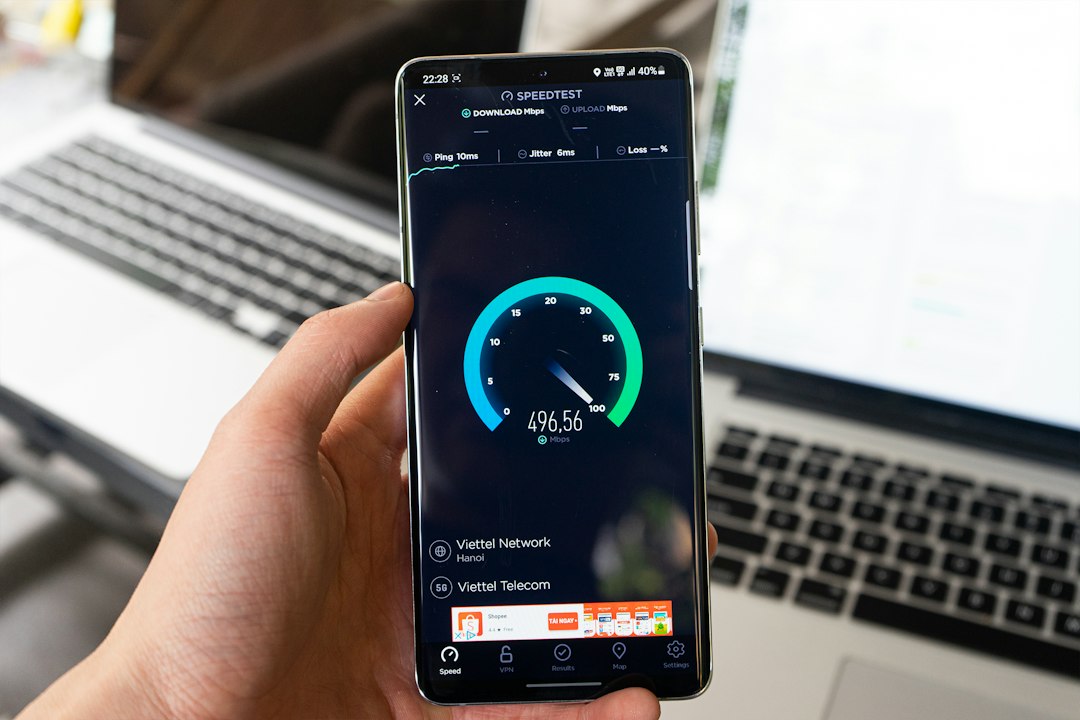
Start by checking your speed using Ofcom's speed checker and note the results. What happens next depends on when your contract started.
Contracts from 1 March 2019 onwards. Ask your provider for your Minimum Guaranteed Access Line Speed (MGALS) for your line. If your actual speed is below that figure, check whether your provider has signed up to the New Voluntary Codes of Practice on Broadband Speed on Ofcom's website.
If they have signed up, give them your speed checker results. They then have one month to fix the problem. If they cannot fix it, you can cancel without paying a fee, and switch to a new provider. If your deal bundles TV, mobile or a home phone, you can switch those at the same time without a fee too.
If your provider has not signed up to the code, they do not have to act, but it is still worth reporting your results. You can ask for a discount, and if you do cancel and get charged, you can ask them to waive the fee given the poor service.
Contracts before 1 March 2019. You do not have the same automatic right. You can ask for a discount if speeds are slower than you were told, and you can ask for any cancellation fee to be waived, but there is no guarantee.
Note the difference between slow speeds and general faults. The free exit hinges on your provider being signed up to the speed code and failing to fix a sub-MGALS speed within the month. If you are simply frustrated with reliability, report the fault and give them a chance to sort it before you assume you can leave for nothing.
Moving home and provider coverage
Moving house does not automatically let you leave for free. First check whether your provider offers the same service at your new address. If they do, you may just pay a small fee to move the service across.
You might face a cancellation fee if:
- Your provider cannot supply the same service in your new area.
- You are renting and the service is already included in the place you are moving to, but you still have an existing contract of your own.
Even then, explain your situation. Providers will sometimes reduce or remove the fee, especially where they genuinely cannot serve your new address.
How early termination charges are calculated
If none of the free routes apply and you still want out, you will pay an early termination charge covering the rest of your minimum term. The minimum period is usually 12, 18 or 24 months from the date your service started.
The charge should reflect what you would have paid for the remaining months, minus the costs the provider saves by no longer supplying you, such as payments to its own suppliers. It is not meant to be a pure penalty on top of the contract value.
Providers spell this out differently:
- BT takes your monthly price, multiplies it by the months left on each service, and adds VAT. It deducts the costs it saves from you leaving early, and gives 1% off for early receipt of your final payment.
- EE adds up the outstanding monthly charges for the rest of your minimum term (accounting for any recurring discount, calculated at a daily rate), deducts VAT, then deducts 4% for early payment, applies any account credit, adds any remaining Add to Plan charges, and finally adds VAT back on to reach the Remaining Contract Charge.
A worked example
Suppose you pay £30 a month and have 8 months left. As a rough guide, 8 × £30 = £240 before any adjustments. Your provider should then take off the costs it saves by no longer serving you, and may apply a small discount for early payment. The figure you actually owe will be lower than the headline £240, though how much lower depends on the provider's own cost savings. You may also owe money for equipment such as a router if you cannot return it.
Online early termination fee calculators can give you a ballpark. Enter your provider, monthly fee and remaining months for an estimate, then treat that as a starting point rather than an exact bill.
How to cancel step by step
- Read your terms and check your dates. Find your minimum contract end date. For BT that is on the My BT home page or app; other providers show it in your online account.
- Work out whether a free route applies. Cooling-off period, unnotified price rise, unfixable slow speed, or expired minimum term.
- Gather evidence. Speed checker results, price rise letters or emails, and your account reference number.
- Give notice. Most providers require 30 days' notice, and your service continues (and is billed) during that period. BT and EE both ask for 30 days. Sky asks for 14 days' notice. You can usually give notice by phone, post, email or webchat.
- Keep records. If you write, send by recorded delivery and keep copies. If you cancel within a cooling-off period by letter or email, the cancellation counts from the date you send it.
If you are switching to another provider rather than just disconnecting, you often do not need to cancel yourself. Under the One Touch Switch process, introduced in 2024 for landline and broadband, your new provider handles the switch and the cancellation of your old service for you. Your old provider is responsible for giving accurate switching information, and you may be entitled to compensation if it gives you wrong information or there is a delay in transferring your service.
What to do if you are charged a fee unfairly
If you believe you qualified for a free exit but have been billed anyway, take it up in stages.
- Complain to your provider first. Put it in writing so there is a record. State clearly which free-exit ground applies, for example: "I am cancelling within the 30 days' notice of a price increase, so under the terms of my contract no early termination fee applies." Attach your evidence.
- Ask them to waive the fee. Even where you have no strict legal right, providers will sometimes waive or reduce charges over poor service or a house move they cannot support. Ask directly.
- Escalate to an ombudsman. If your complaint is not resolved after 8 weeks, or the provider sends you a deadlock letter sooner, you can take it to an approved dispute resolution scheme: Ombudsman Services: Communications or CISAS, depending on which one your provider belongs to. This is free to use, and their decision is binding on the provider.
A note on your credit file: broadband bills can appear on credit reports, and missed payments can stay on record for at least six years and lower your score. Do not simply stop paying a disputed fee. Pursue the complaint properly so an unpaid charge does not turn into a mark against your credit.
FAQs
Can I cancel my broadband contract early? Yes, in most cases you can leave early, but you will usually pay an early termination charge for the remaining months of your minimum term unless one of the penalty-free grounds applies.
In what situations can I leave without paying an exit fee? Within the 14-day cooling-off period (if you signed up online or by phone), after an unnotified mid-contract price rise, when your provider cannot fix speeds below your guaranteed minimum, or once your minimum term has ended.
How long is the cooling-off period? 14 days for contracts bought online or over the phone. Some providers, such as Sky, offer longer (31 days). You do not get an automatic cooling-off period if you signed up in person.
Can I leave for free if my provider raises the price mid-contract? Yes, if the rise was not something your contract allowed and they give you 30 days' notice, you can cancel within those 30 days without a fee. You cannot if you signed up before 23 January 2014, or if the increase was clearly set out and agreed when you signed.
Can I leave if my broadband is too slow? If your contract started on or after 1 March 2019, your speed is below your Minimum Guaranteed Access Line Speed, and your provider has signed up to the voluntary speed code but cannot fix it within one month, you can cancel free of charge.
What if I move and my provider cannot serve the new address? You may face a cancellation fee, but explain the situation, as providers often reduce or remove it where they genuinely cannot supply you.
How much notice do I need to give? Commonly 30 days. This applies even once your minimum term has ended, and you are billed for the service during the notice period.
Julian Glover
Julian Glover covers UK home and business broadband, comparing providers, explaining new tech, and helping readers find the right deal for their household.